
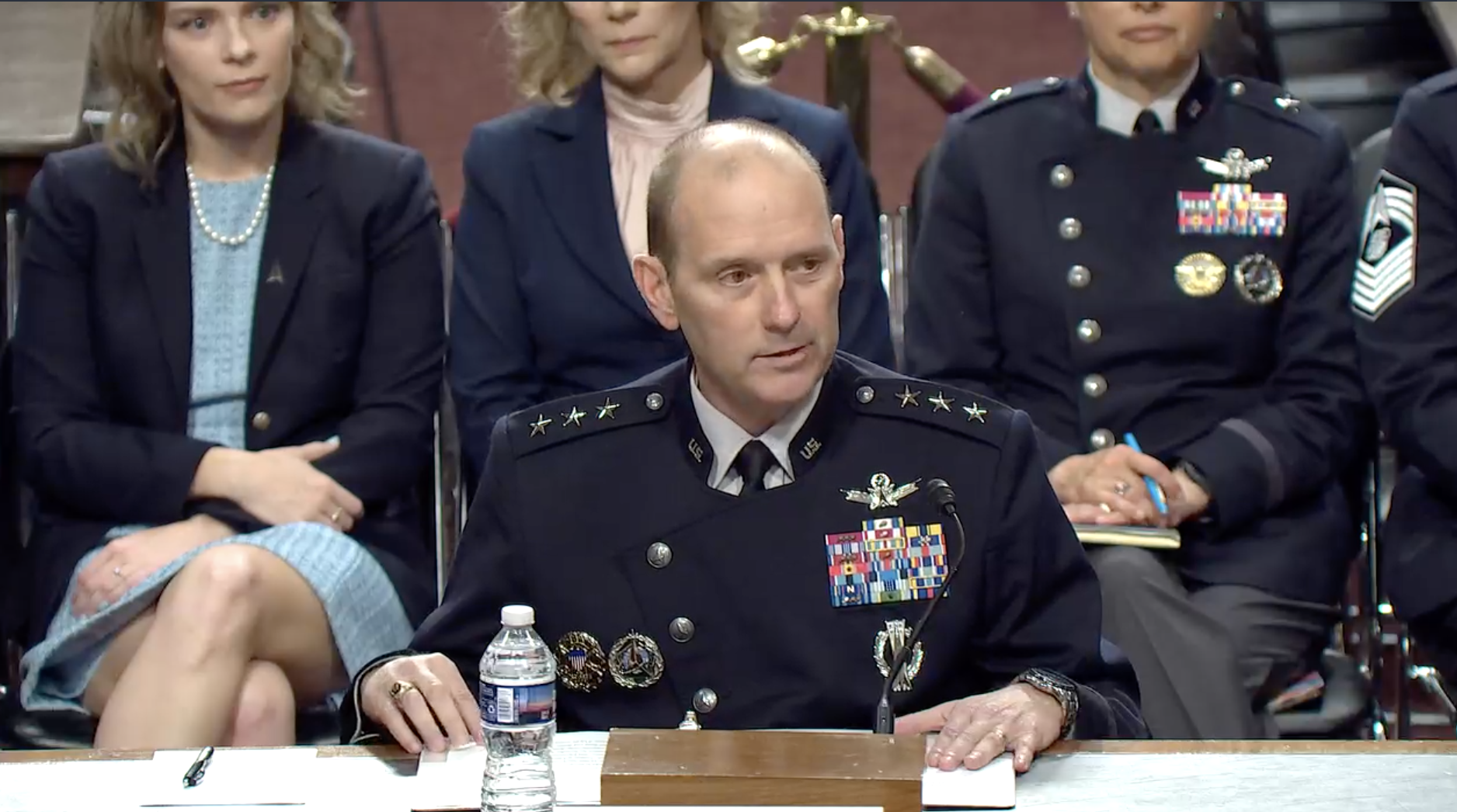
The U.S. Space Force is navigating a consequential leadership and funding inflection point. Lt. Gen. Douglas Schiess, President Trump's nominee to become the next Chief of Space Operations, appeared before the Senate Armed Services Committee on July 16, 2026 for his confirmation hearing, where he defended a proposal to more than double the service's budget. The hearing underscored both the administration's ambitions for space as a military domain and the political friction those ambitions face on Capitol Hill.
That friction is real. The same week Schiess testified, House lawmakers signaled they would approve only a fraction of the funding★ the Trump administration requested for major space programs, according to Defense One — a significant gap that casts uncertainty over the expansion the nominee was tasked with defending.
A Service Redefining Its Strategic Weight
The confirmation comes as Gen. Chance Saltzman, on the eve of his retirement as Chief of Space Operations, has been making the case that his service has long been underestimated. "We really used to be considered icing on the cake," Saltzman told reporters, a candid acknowledgment that space capabilities were historically treated as supplemental rather than foundational to U.S. military power. That framing has shifted, and Saltzman's final months in the role reflect a deliberate effort to cement a more central status for the Space Force.
In his final major public address, Saltzman broadened his argument beyond space budgets or orbital assets. Speaking to the role of the military in a sharply divided political environment, he described a nonpartisan military as vital "ballast" for American democracy — a steadying force during a period of intense partisan turbulence, according to Air & Space Forces Magazine. The remarks were notable for their explicit engagement with the political moment, positioning military institutions as guardrails for democratic stability rather than purely instruments of warfighting.
What Comes Next
If confirmed, Schiess will inherit both the strategic momentum Saltzman has worked to build and the budgetary fight that momentum requires. The gap between White House funding requests and what Congress appears willing to authorize represents the sharpest near-term challenge. A more-than-doubled budget would represent a significant reorientation of defense spending toward space; getting there will depend on whether Schiess can build the kind of congressional support that Saltzman, in his final weeks, was still actively cultivating.
Saltzman's public emphasis on democratic resilience and nonpartisan military values adds a subtler dimension to the transition. His framing is less about satellites and launch cadence than about institutional identity — an argument that the Space Force, and the military broadly, has a role to play in national life that transcends any single budget cycle.
★ AI inference: One or more analytical conclusions in this article were drawn by the AI from cited facts and are not directly stated in the cited sources.