
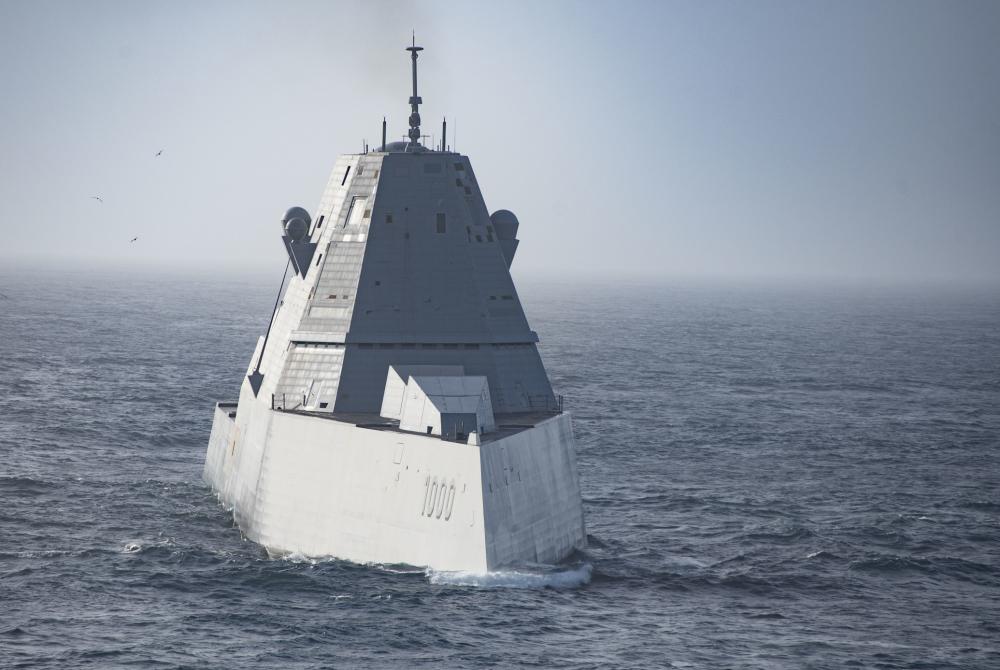
The U.S. Navy's program to equip three Zumwalt-class destroyers with hypersonic missiles is running approximately two years behind its original schedule, according to a recent Government Accountability Office assessment. The findings, reported July 17, 2026, highlight deepening concerns about the Pentagon's ability to execute one of its most visible surface warfare modernization efforts on time and within budget.
A Coordination Problem Bigger Than One Program
Beyond the schedule slip, the GAO identified a structural concern: the Navy and Army are each pursuing hypersonic weapons programs without a unified, interservice strategy to govern how those efforts relate to one another. That absence of coordination raises the prospect that the two services could end up funding redundant development tracks, building incompatible systems, or working at cross-purposes on technology that both depend on★.
The watchdog's warning reflects a recurring pattern in large-scale Pentagon acquisition — individual service programs advancing in parallel without sufficient oversight of how they fit together. When services lack a shared roadmap, the result can be duplicated investment in overlapping capabilities, or gaps in capabilities that each service assumes the other is covering. In the hypersonic domain, where development costs are high and timelines are already compressed, uncoordinated spending carries an especially steep price.
The GAO's findings put pressure on defense leadership to impose clearer joint governance over hypersonic programs before the schedule and cost problems compound further. Whether the Department of Defense moves to establish a unified strategy — and how quickly — will likely determine whether the current delays represent a manageable setback or the leading edge of a broader acquisition failure.
★ AI inference: One or more analytical conclusions in this article were drawn by the AI from cited facts and are not directly stated in the cited sources.