
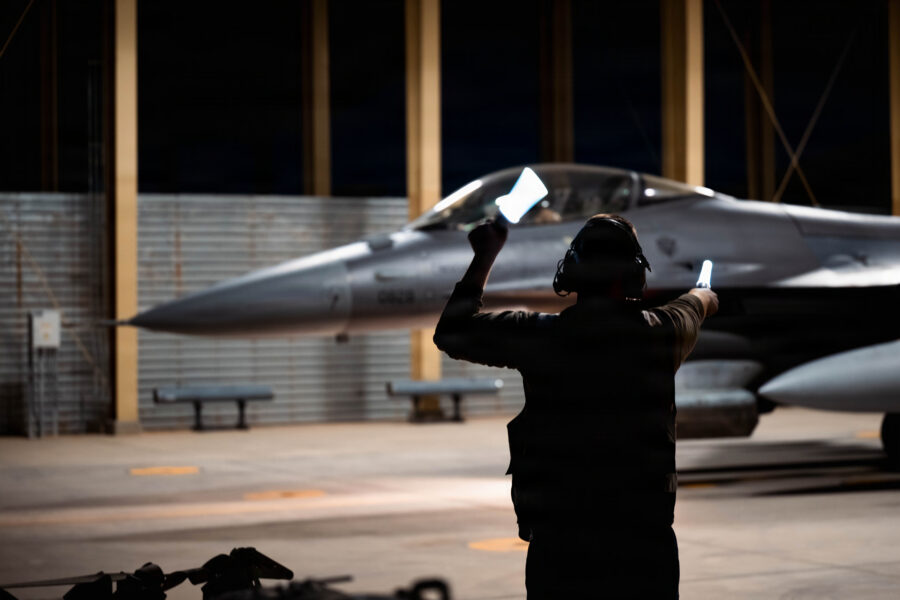
The Pentagon is sending additional F-16 Fighting Falcons and F-35 Lightning II fighters to the Middle East as the U.S. conflict with Iran intensifies, with both sides now striking each other's infrastructure in an escalating exchange, according to reporting from Air & Space Forces Magazine and TWZ. Air Force tankers and other fighter aircraft are also heading to the region to support the expanding operation.
The mutual strikes on infrastructure targets mark a significant escalation in the conflict's tempo, and the rapid reinforcement of U.S. airpower in the region reflects the Pentagon's effort to maintain military overmatch as the situation deteriorates.
Space Force's Quiet but Essential Role
Beyond the visible movement of warplanes, the conflict has illuminated a less visible dimension of modern warfare: the dependence of U.S. military operations on space-based capabilities. The head of Space Force's Combat Forces Command stated publicly on July 17 that Guardians have been deeply involved across several mission areas since fighting began — including missile warning systems that alert commanders to incoming threats, satellite communications that enable drone operations, and competition for control of the electromagnetic spectrum.
The general framed the conflict as demonstrating a "return to US spectrum dominance," singling out electromagnetic spectrum operations as an area where Space Force personnel have been especially active. That claim reflects a broader strategic reality: modern strike aircraft, remotely piloted vehicles, and time-sensitive targeting all rely on satellite links and protected communications pathways that Space Force is responsible for sustaining and defending★.
Missile warning in particular has taken on acute importance as Iran has demonstrated both the will and the capability to strike back at U.S. and allied assets★.
The Combat Forces Command's public acknowledgment of Space Force's role is itself noteworthy. A senior general specifically highlighting spectrum dominance and satellite communications support during an active conflict signals both confidence in the mission and a deliberate effort to make the service's contributions visible to a broader audience.
Together, the conventional buildup and the Space Force's operational tempo paint a picture of a conflict that is simultaneously kinetic and electromagnetic — fought in the air over the Middle East and, invisibly, across the orbital and spectrum layers that modern military power depends on.
★ AI inference: One or more analytical conclusions in this article were drawn by the AI from cited facts and are not directly stated in the cited sources.