
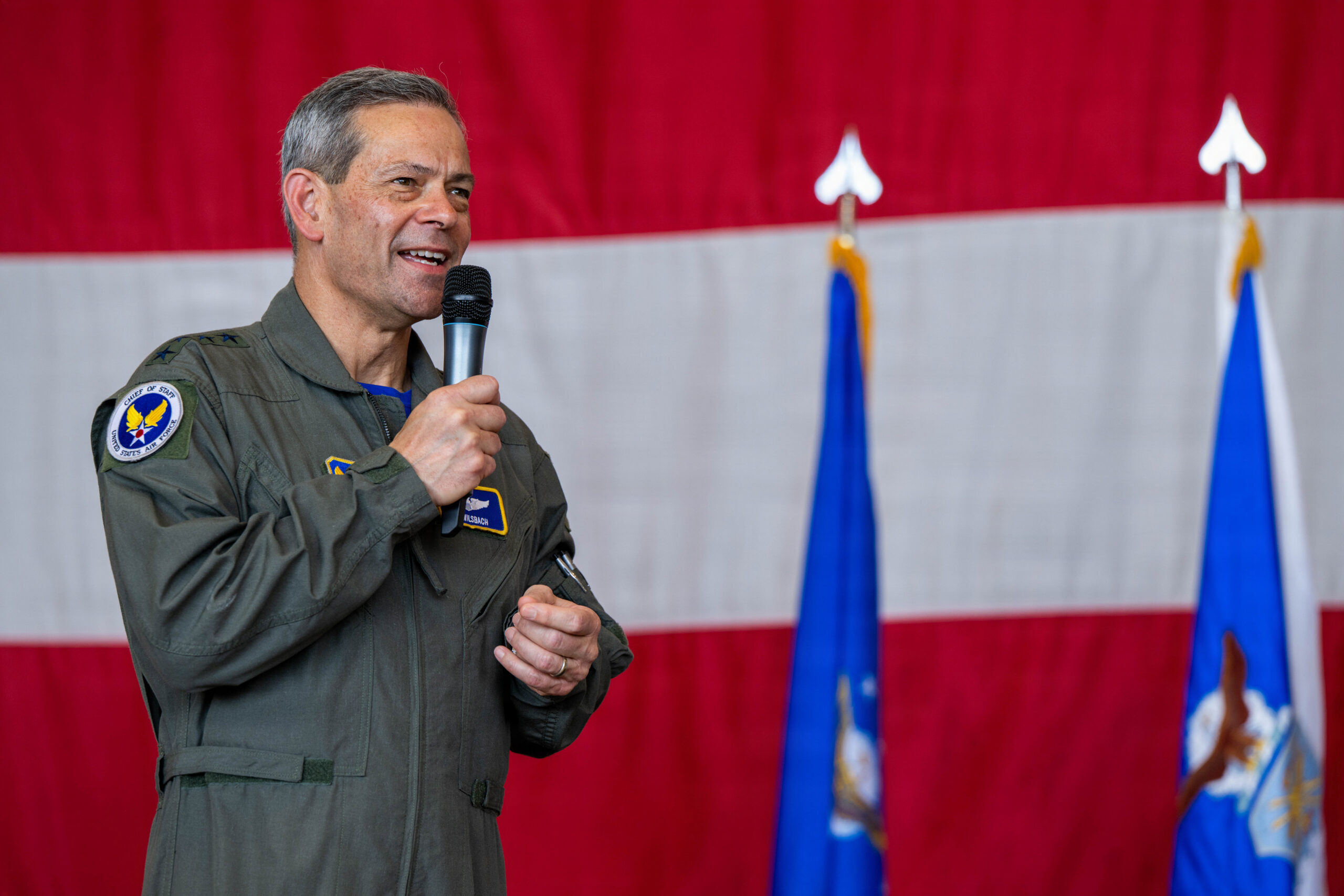
Air Force Chief of Staff Gen. Kenneth Wilsbach sat down this week for a candid one-on-one interview in which he laid out his biggest concerns for the service — addressing operational lessons drawn from recent activity involving Iran, the bumpy state of the T-7A Red Hawk trainer program, and an ongoing shortfall in F-35 deliveries. The remarks offer a frank look at how the service's top officer is recalibrating priorities in the face of both strategic uncertainty and stubborn industrial headwinds.
T-7A Delays Put the Training Pipeline at Risk
Perhaps the most concrete near-term challenge Wilsbach flagged is the state of the T-7A. Sustainment problems have proven persistent enough that the service's shift to full-rate production has now slipped to 2029, according to FlightGlobal. That delay means the Air Force will lean on aging legacy trainers longer than planned, adding strain to a pilot production pipeline the Red Hawk was designed to modernize★. Wilsbach cited the program's ongoing flight-testing status as among his active areas of concern★, a reflection of the broader difficulty the service faces in translating new platforms from development into operational readiness on schedule.
The T-7A's troubles fit a wider pattern in defense procurement. Boeing's track record on major Air Force programs has drawn scrutiny across the board★ — from the trainer to the Air Force One recapitalization effort, where the company's defense chief has acknowledged additional cost growth is expected as final assembly and wiring work continues toward a target 2028 delivery.
Iran, Allied Airpower, and the F-35 Gap
Beyond the trainer program, Wilsbach pointed to lessons from Iran as informing how the Air Force is thinking about threats and readiness★. The discussion reflects an ongoing effort within the service to incorporate real-world events into strategic planning rather than relying solely on long-range assumptions.
On the F-35, Wilsbach acknowledged delivery delays that have left the service short of expected aircraft, a shortfall with compounding effects on fleet size, readiness, and the pace of retiring older platforms★.
Separately, at the Global Air and Space Chiefs Conference earlier in the week, Wilsbach offered a pointed summary of his strategic philosophy: that the most effective airpower is combined airpower, emphasizing the value the Air Force places on allied integration as a force multiplier★. The sentiment aligns with broader efforts to deepen interoperability with partner air forces at a time when.
Taken together, Wilsbach's public posture this week reflects a leadership approach that is openly grappling with program risk and industrial capacity, while insisting that the service's strategic orientation — toward allied cooperation and learning from live operational environments — remains on course.
★ AI inference: One or more analytical conclusions in this article were drawn by the AI from cited facts and are not directly stated in the cited sources.