
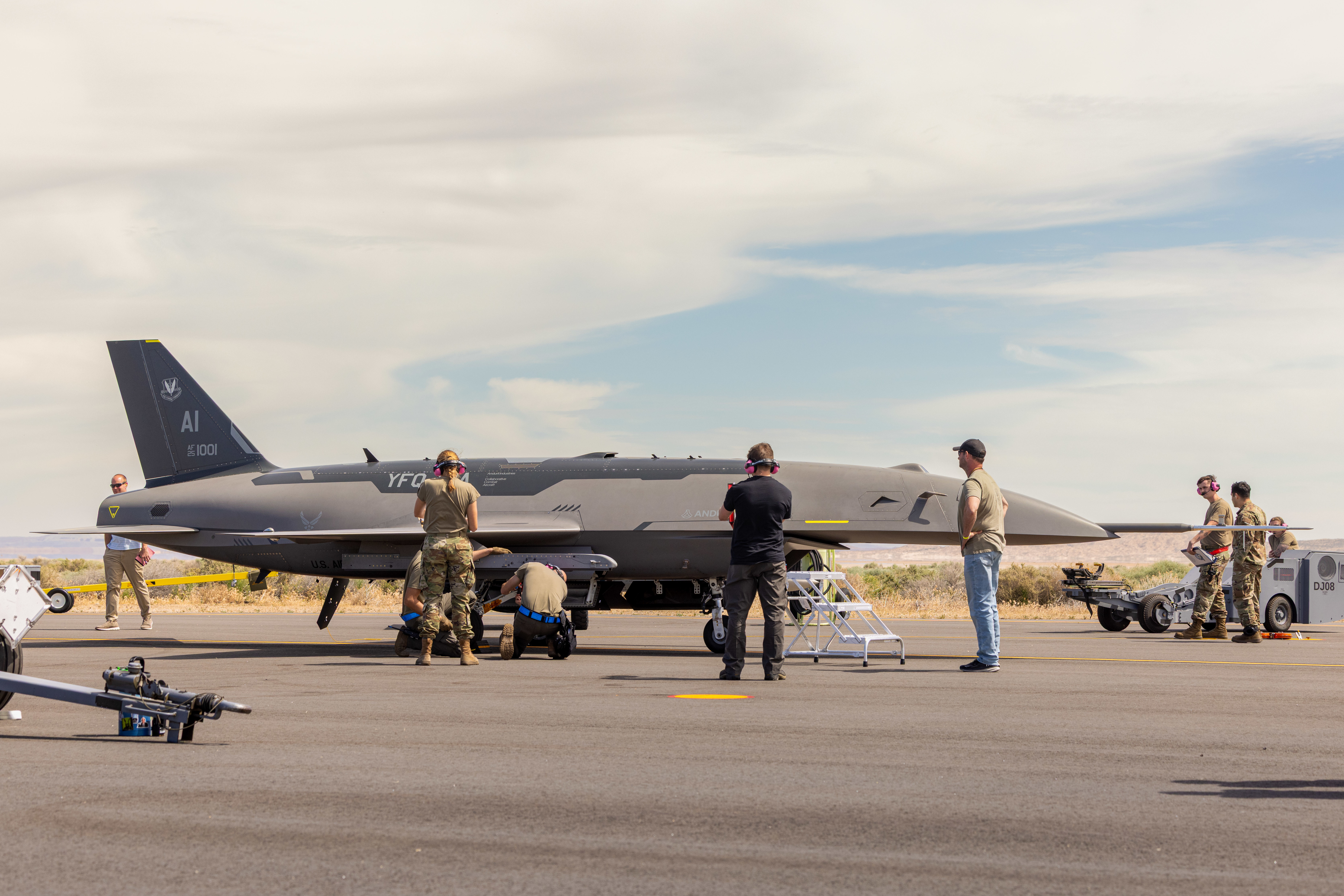
Building a capable semi-autonomous combat drone is only half the challenge. Getting the pilots and operators who fly alongside it to trust the machine enough to act on its behavior in a high-stakes environment is the other half — and former Air Force Secretary Frank Kendall says that problem gets solved in simulators and on exercise ranges, not in the lab.
Kendall, speaking publicly on the subject in mid-July 2026, described trust between human operators and Collaborative Combat Aircraft (CCAs) as a crucial milestone in the program's fast-moving development arc.
Why Trust Is a Bottleneck
For any semi-autonomous system operating in a combat environment, the question of human trust is both practical and doctrinal. A pilot commanding a CCA wingman needs enough confidence in the drone's judgment — and enough familiarity with its behavior under pressure — to act on what it does without second-guessing every output. That kind of calibrated confidence is not achievable through technical briefings alone; it has to be earned through repetition in realistic conditions.
Kendall pointed to simulations as the starting point for developing that familiarity. From there, the logical next step is integration into large-force exercises that approximate real operational complexity★.
Red Flag as a Testing Ground
Kendall described the prospect of adding CCAs to Red Flag exercises as a "fascinating" development milestone.
For a program already moving quickly on the development and procurement side★, closing the trust gap on a parallel track may be as important as any engineering milestone.
The broader implication of Kendall's argument is that the Air Force's investment in CCA capability is only fully realized when operators are confident enough to employ the systems decisively. Simulation and live exercises are, in that framing, not training overhead — they are a core part of making the capability real.
★ AI inference: One or more analytical conclusions in this article were drawn by the AI from cited facts and are not directly stated in the cited sources.