
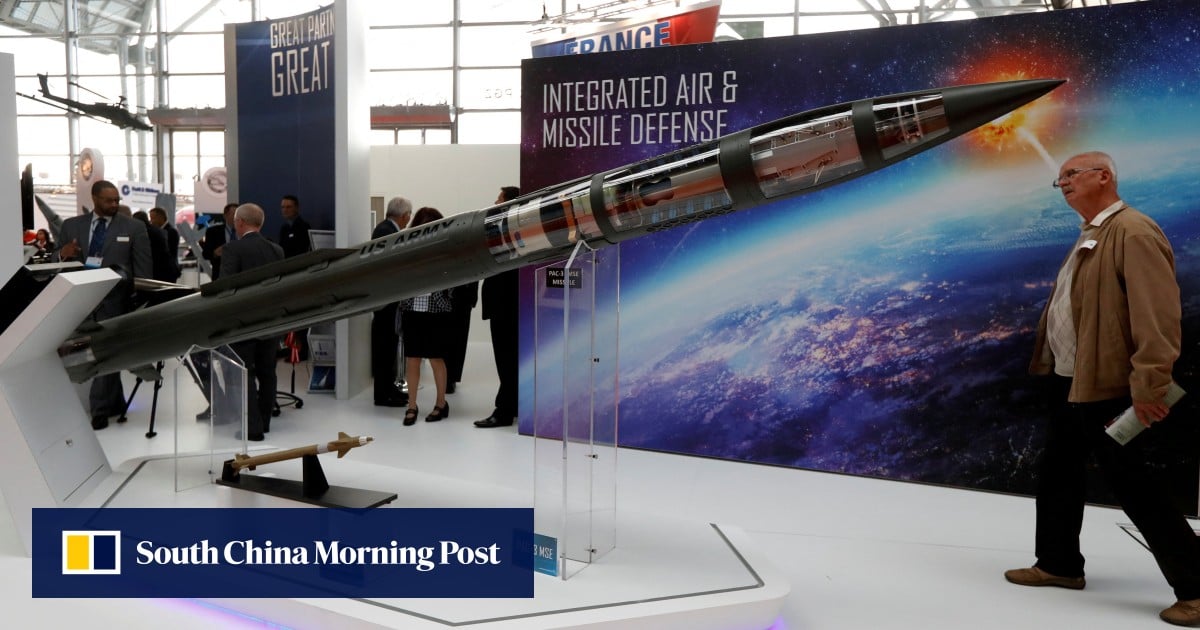
The opening day of the Farnborough International Airshow on July 20 served as a showcase for a defense industry grappling with a difficult arithmetic: interceptor missiles that cost several million dollars each are routinely being used to destroy drones and projectiles that cost a fraction of that. Two prominent announcements on Monday reflected a concerted push to close that gap.
Lockheed's Cost-Cut Patriot and MBDA's Mobile Interceptor
Lockheed Martin introduced the PAC-3 Adapted Capability Effector, or ACE — a new Patriot interceptor missile designed to come in at less than half the price of its existing PAC-3 MSE missile, which runs roughly $4 million per round. The timing is deliberate: the United States and allied nations have spent heavily defending against relatively cheap threats, and the calculus of that exchange has become increasingly difficult to justify. By offering a lower-cost interceptor within the established Patriot architecture, Lockheed is positioning the ACE as a way to sustain high-volume air defense operations without depleting stockpiles or budgets as rapidly.
MBDA took a parallel approach, displaying a low-cost ground-launched interceptor at the show in a truck-mounted configuration. The weapon represents an upgrade to the company's existing ground-launched missile line, and the truck-mount format underscores the broader trend toward mobility and rapid deployability — qualities that have become critical as battlefield conditions evolve and fixed infrastructure proves vulnerable.
Together, the two announcements illustrate a strategic convergence among Western contractors: legacy platforms are being made cheaper, lighter, and more flexible rather than replaced outright. The emphasis on cost reduction reflects both fiscal pressure and lessons absorbed from extended conflicts where interceptor consumption has outpaced production capacity.
A Busy Stage for Broader Defense Conversations
Beyond air defense economics, Farnborough's first day encompassed a wider range of high-profile defense topics. Air Force One modernization drew attention. The future direction of the Global Combat Air Programme was also under active discussion at the show.
These threads share a common context: defense ministries across NATO and allied nations are simultaneously pushing for technological advancement and wrestling with constrained procurement budgets★, making affordability a competitive differentiator rather than an afterthought. The Farnborough announcements suggest contractors have internalized that message.
★ AI inference: One or more analytical conclusions in this article were drawn by the AI from cited facts and are not directly stated in the cited sources.