
U.S. Transportation Command (TRANSCOM) has crossed a significant threshold in military AI adoption, deploying artificial intelligence agents in an operational capacity for the first time to support strike planning against Iran under Operation Epic Fury.
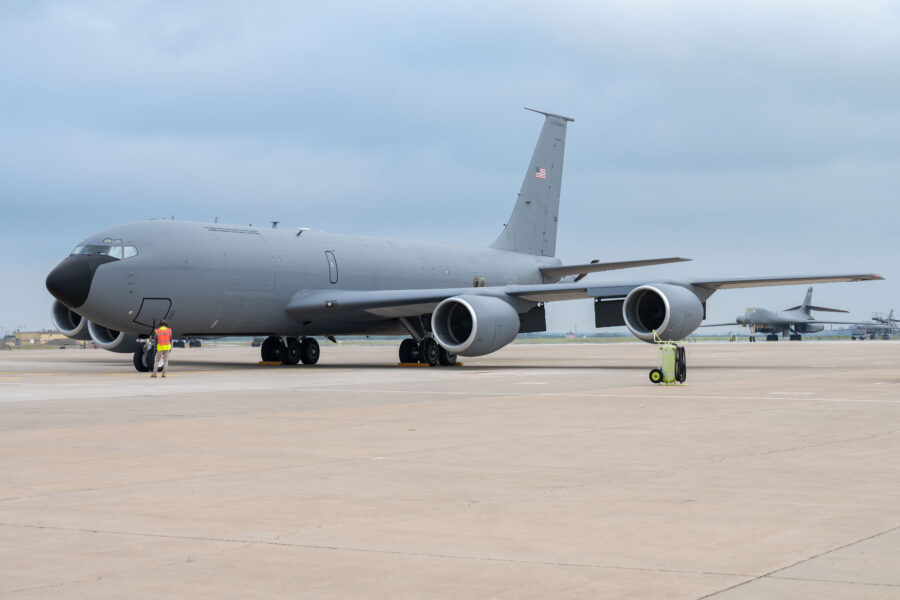
The trigger was a diplomatic and logistical obstacle: Spain denied U.S. Air Force tanker aircraft access to its bases, complicating the refueling architecture needed to sustain long-range strike operations★. Faced with a real-time access-denial problem during live mission planning★, TRANSCOM planners turned to AI agents to help identify and work through alternative logistics solutions★.
A Shift in How the Military Plans Under Pressure
Employing AI agents in direct support of active operational planning, under genuine time and access constraints, signals that U.S. military commands are now willing to trust these systems in consequential, real-world scenarios.
Access-denial situations, in which host nations restrict basing or overflight rights, represent one of the more complex planning challenges in power projection. They compress decision timelines, require rapid reassessment of available infrastructure, and demand coordination across multiple commands and partner agreements. That TRANSCOM reached for AI agents specifically in this context — rather than a more routine planning environment — suggests confidence in the technology's ability to handle ambiguous, constrained problems, not just optimized ones.
The Episode also illustrates a broader dynamic in modern conflict: political decisions by third-party nations can impose immediate operational consequences, and the speed at which military planners can adapt is itself a strategic variable.
Those questions will matter as the military works through policy and doctrine for AI-assisted command-and-control in future contested-access scenarios.
★ AI inference: One or more analytical conclusions in this article were drawn by the AI from cited facts and are not directly stated in the cited sources.