
The U.S. Space Force took two distinct but thematically linked steps forward in space infrastructure last week — one through a major software investment in military strategic communications, the other through another commercial satellite launch from a military facility.
Sphinx Defense Wins ESS Ground Segment Contract
Space Systems Command on July 27, 2026 announced a $287 million contract award to Sphinx Defense to develop a mission planning prototype for the Evolved Strategic Satellite Communications (ESS) program's ground segment. The ground segment — the terrestrial software and hardware that controls, schedules, and directs satellite communications — is a critical enabler for the broader constellation★, and the mission planning prototype will help determine how that segment ultimately functions at scale★.
Starlink Continues Expanding from Vandenberg
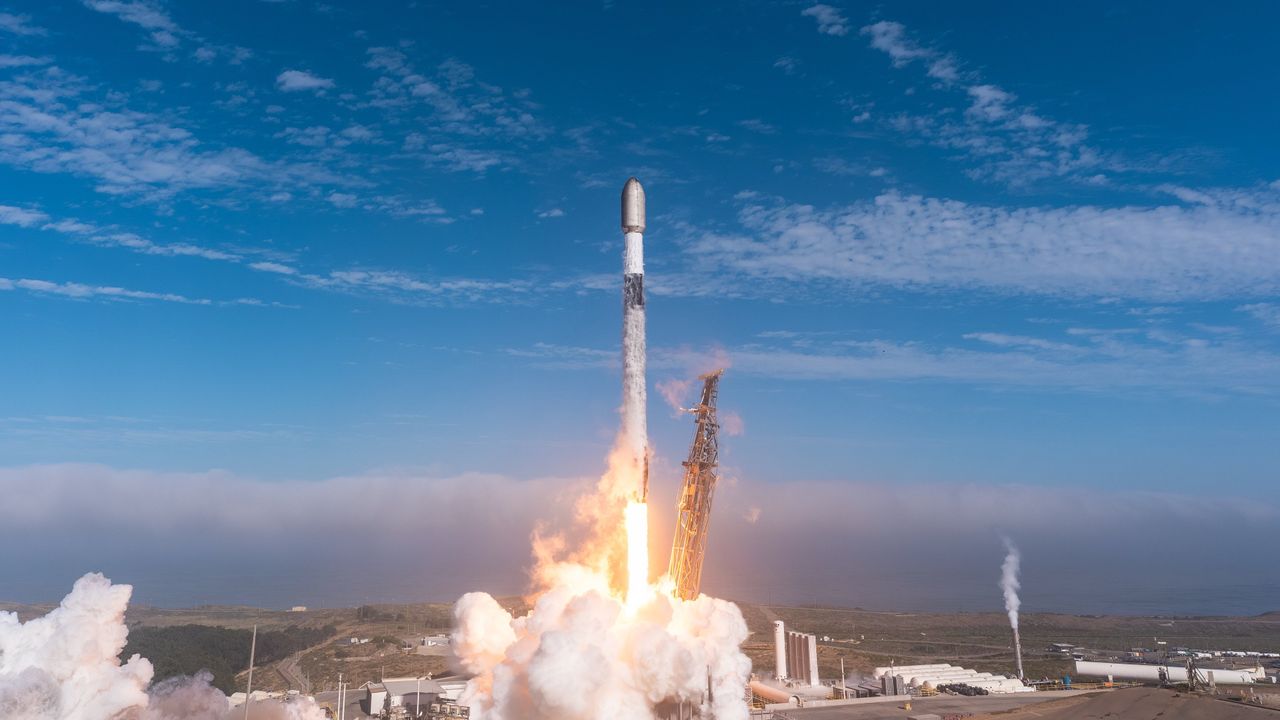
Two days earlier, on July 25, 2026, a SpaceX Falcon 9 rocket lifted off from Vandenberg Space Force Base at 8:51 a.m. PDT, carrying 24 Starlink satellites to orbit. The mission, part of SpaceX's steady cadence of constellation expansion flights, used the Space Force's West Coast launch range — a routine arrangement that nonetheless reflects how deeply commercial operators have become embedded in military-controlled launch infrastructure.
Two Tracks of Space Modernization
Taken together, the ESS contract and the Starlink launch reflect the dual nature of the current American approach to space. The Vandenberg Starlink launch, by contrast, is commercial business conducted on federal land, with the broader constellation growing mission by mission.
Whether and how those commercial assets formally integrate into defense planning frameworks remains an evolving policy question; what is clear from last week's activity is that both tracks are advancing in parallel.
★ AI inference: One or more analytical conclusions in this article were drawn by the AI from cited facts and are not directly stated in the cited sources.