
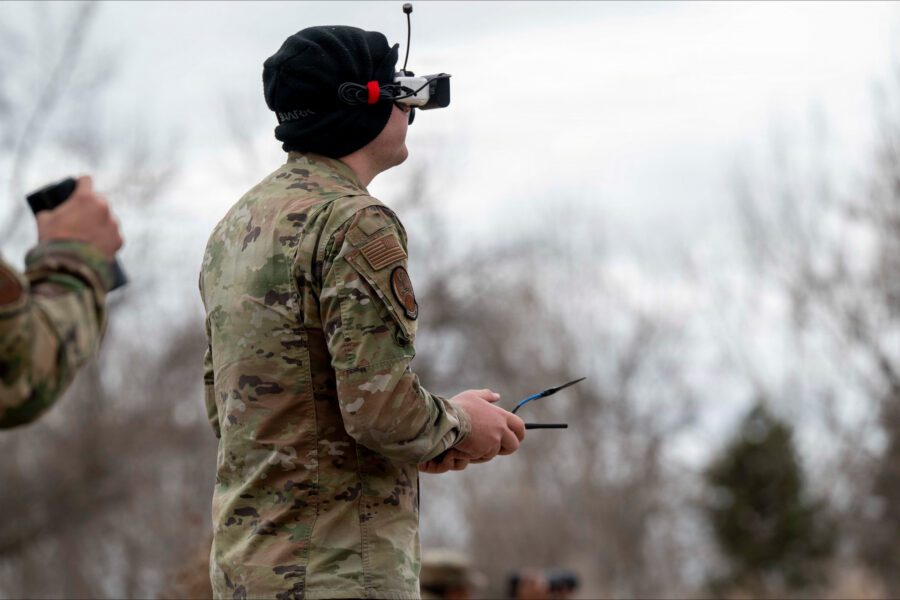
The U.S. Air Force is moving to formalize base defense against drone threats with a new specialized force concept called "Point Defense" — a program that pairs purpose-trained Airmen with dedicated equipment to shield air bases from unmanned aerial vehicle attacks. The effort reflects an escalating urgency within the service as drone warfare has moved from a theoretical concern to an operational reality already disrupting military effectiveness on active battlefields.
Standing Up the Capability
Air Combat Command took an early organizational step in January 2026, establishing a counter-drone task force — including a Point Defense Battle Lab — charged with developing, testing, and validating improved tactics, techniques, and procedures for defending installations against small unmanned aerial systems. By mid-2026, that work had translated into a distinct new role for Airmen: a specialty designed around the specific demands of aerial base defense, with training pipelines built to match★.
The creation of a dedicated force structure, rather than assigning counter-drone duties as a collateral mission for security or air defense units★, signals a recognition inside the Air Force that the threat has matured enough to warrant its own professional specialty.
Experts Raise the Bar
Despite the organizational progress, subject-matter experts are pressing for more. According to reporting in Air & Space Forces Magazine, a recent independent assessment concludes that the Point Defense model — while a meaningful advance — may still fall short when measured against the scale of drone attacks already seen in contemporary conflicts. Large coordinated unmanned swarms have demonstrated the ability to overwhelm localized defenses★, and analysts argue that protecting a modern air base requires layered solutions beyond what a point-defense unit alone can provide★.
The gap between the pace of innovation and the pace of threat evolution is the central tension in the debate.
The urgency is not hypothetical. Drone strikes on military installations have already had measurable effects on operational readiness in active theaters★, providing real-world data points that are informing both the Air Force's current planning and the criticism being leveled at it. Whether the service's reform efforts can scale quickly enough to match a threat that is itself accelerating remains the core readiness question facing planners.
★ AI inference: One or more analytical conclusions in this article were drawn by the AI from cited facts and are not directly stated in the cited sources.