
The U.S. military took two notable steps this week to deepen its reliance on commercial space companies for next-generation logistics and communications, reflecting a broader strategic pivot toward space-centric operations.
Rocket Cargo Gets a Bigger Budget
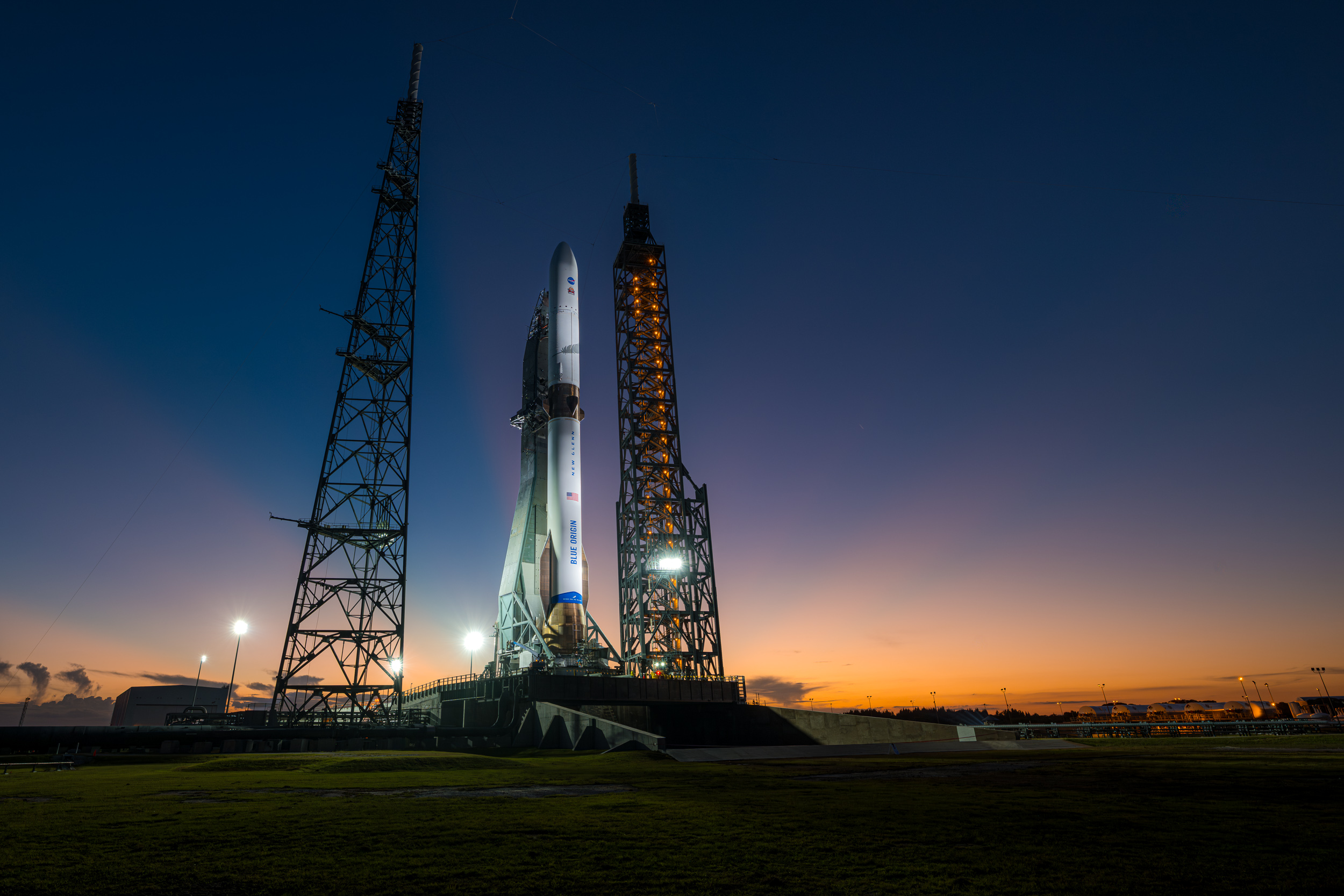
The Air Force Research Laboratory added $11.7 million to an existing contract with Blue Origin, continuing the service's investment in studying whether orbital-class rockets can deliver cargo rapidly to any point on the globe★.
The military's interest in rocket cargo is not isolated. Commercial startup Hop Aero, which emerged from the Y Combinator accelerator in late July 2026, is independently developing an autonomous suborbital rocket called Rook aimed at the same cargo-delivery use case. While Hop Aero is pursuing its own commercial path rather than a Pentagon program★, its appearance signals that the broader market for rapid rocket delivery is attracting private capital alongside government contracts — a dynamic the Defense Department has actively tried to cultivate.
Space Force Bets on Laser Links
Separately, the Space Force awarded K2 Space a $22.9 million contract to demonstrate laser-based communications in orbit. Two K2 satellites will carry optical terminals designed to connect military systems operating in space, using light rather than radio frequency to transmit data★.
The contract is framed as a demonstration, meaning the Space Force is paying to prove the technology works at scale before committing to broader procurement. That approach — fund a commercial provider to demonstrate a capability — has become a recurring pattern in how the Space Force structures early-stage investments.
A Pattern of Commercial Partnerships
Taken together, the two awards illustrate the Pentagon's current approach to space modernization: identify a capability gap, partner with a commercial company already working in that domain, and use relatively modest demonstration contracts to mature the technology before larger commitments. The Air Force's Blue Origin expansion and the Space Force's K2 Space award both fit that template, leaning on private-sector innovation rather than developing systems entirely in-house. Whether these demonstrations translate into operational programs will depend on how each performs against military requirements in the coming years.
★ AI inference: One or more analytical conclusions in this article were drawn by the AI from cited facts and are not directly stated in the cited sources.