
Expanding the Warhead and Guidance Kit Industrial Base
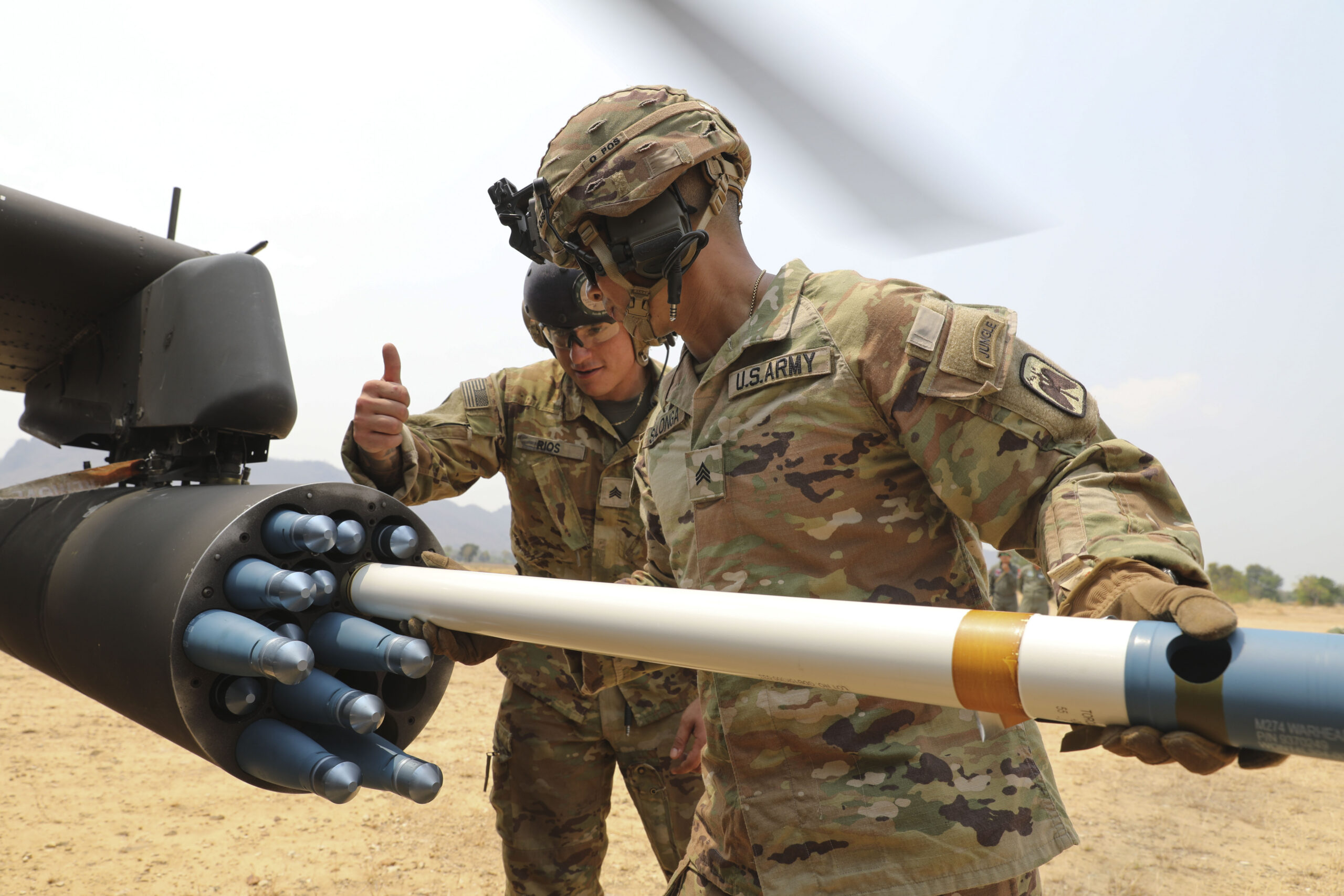
The U.S. Army awarded contracts to four companies — Firehawk, iRocket, Nammo Perry, and Albers — to ramp up production of the M151 warhead, spreading production risk across the industrial base at a time when
On the Air Force side, Boeing received a production green light for the JDAM-LR — a long-range variant of the Joint Direct Attack Munition guidance kit★ — with the U.S. Navy first in line for deliveries.
Australia Steps Into the AIM-260 Program
Perhaps the most strategically notable development is Australia's commitment to purchase the AIM-260 Joint Advanced Tactical Missile, making it the first non-U.S. nation to acquire the still-classified air-to-air missile★. Details about the AIM-260's performance specifications remain limited due to its classification status, but the sale to Canberra marks a significant expansion of the program beyond domestic U.S. use and reflects the depth of the U.S.-Australia defense relationship.
Separately, Australia announced the successful test of a domestically developed solid-fuel rocket motor designed for guided munitions — a step toward indigenous propulsion capability that complements, rather than replaces, the allied procurement it is pursuing in parallel. Together, the two Australian announcements illustrate a dual-track strategy: buying proven allied technology now while investing in sovereign industrial capacity for the longer term.
Taken together, the day's announcements reflect a pattern of defense investment that spans multiple tiers — from warheads for legacy rocket systems to cutting-edge air-to-air missiles — and multiple actors, both American services and a key Indo-Pacific partner.
★ AI inference: One or more analytical conclusions in this article were drawn by the AI from cited facts and are not directly stated in the cited sources.