
With the Space and Missile Defense Symposium approaching — the largest missile defense expo in the United States — a cluster of recent defense industry developments offers a preview of where American military modernization is heading. The announcements span directed energy, legacy nuclear systems, drone technology, and maritime investment, reflecting an accelerating effort to connect once-separate military domains under more unified operational concepts.
Directed Energy Gets a Cross-Platform Foothold
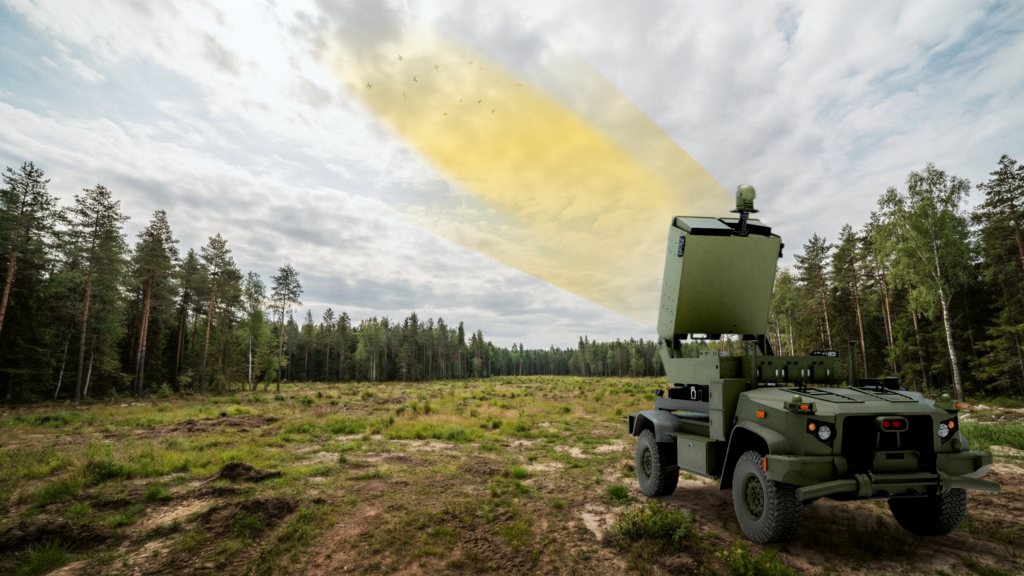
The Marine Corps has awarded California-based Epirus an $11 million contract for HAVOC, a vehicle-mounted high-powered microwave system designed to neutralize drone swarms. The company positions HAVOC as an autonomy-enabled follow-on to its ExDECS platform, which the Corps received earlier this year. A defining feature is a "universal sled mount" that allows the weapon to be configured for both manned and unmanned ground vehicles. The contract signals that the Corps is moving toward production-ready counter-swarm capability rather than continued experimentation.
Nuclear AI, Boeing's Sell-Off, and the Maritime Turn
The Air Force is separately pursuing an AI-powered tool to consolidate Minuteman III ICBM sustainment data currently fragmented across roughly 60 disparate sources. The initiative reflects a pattern emerging across the Pentagon: applying machine learning not only to next-generation platforms but to the maintenance burden of legacy weapons that remain central to U.S. nuclear deterrence.
Boeing, meanwhile, has announced plans to divest three subsidiaries — drone manufacturer Insitu, air traffic management firm SkyGrid, and electric aircraft maker Wisk Aero — to eVTOL startup Archer, pending regulatory approval. The transactions are expected to close before year's end. The sell-off consolidates a set of autonomous and advanced-aviation assets into a single firm.
Rounding out the picture, analysts at the Center for Strategic and International Studies, cited in Breaking Defense coverage, have characterized a recent wave of undersea-focused defense acquisitions as a welcome pivot to a critical warfighting domain. The maritime domain has grown increasingly contested, and the investment activity suggests the defense industry is treating it with a seriousness that has not always been apparent in prior budget cycles. Taken together, these developments — counter-drone hardware, nuclear data infrastructure, aviation restructuring, and undersea investment — suggest that the integration the Symposium is meant to showcase is already well underway in contract awards and boardrooms alike.