
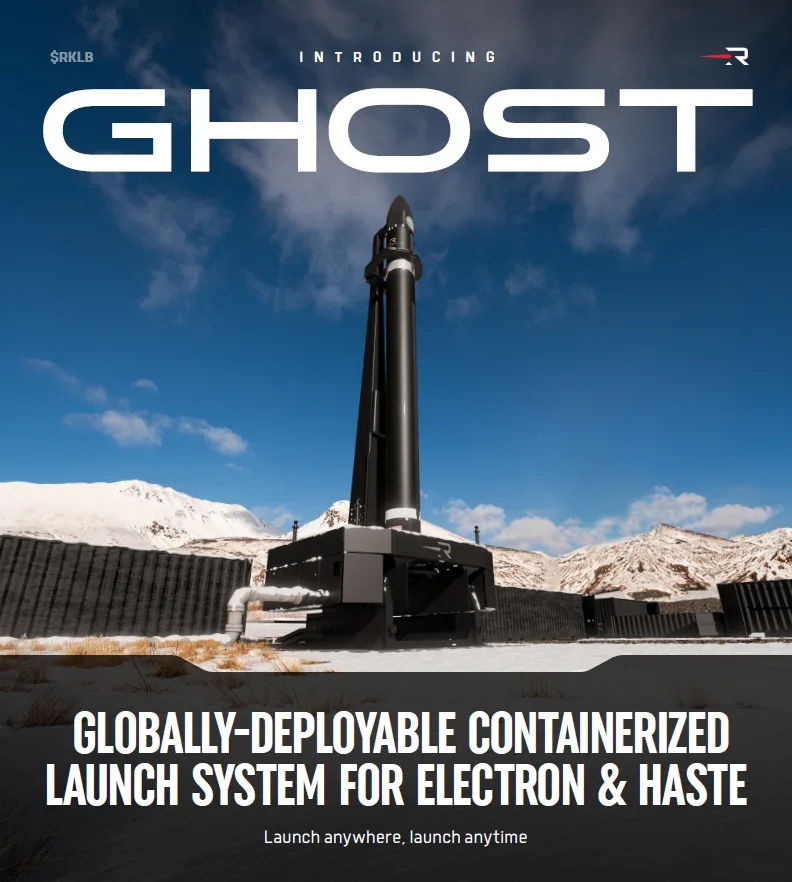
Rocket Lab unveiled GHOST — short for Global Hypersonic & Orbital Spacecraft — a containerized launch platform designed to make responsive spaceflight possible far from established spaceport infrastructure. The announcement arrived in August 2026 as part of what the company described as a record financial quarter★.
The system packs complete rockets, launch infrastructure, ground support equipment, and range control systems into standard shipping containers, allowing the entire stack to be transported and deployed at remote or austere sites around the globe. GHOST is built around Rocket Lab's existing Electron small-launch vehicle and its HASTE hypersonic test rocket★, giving operators the flexibility to conduct either orbital satellite delivery or suborbital hypersonic missions from the same containerized setup★.
The Military Logic
The strategic case for GHOST centers on eliminating the dependency on permanent launch ranges. Fixed spaceports constrain the trajectories and orbital inclinations that are accessible from any given site★ — a meaningful limitation for defense customers who may need launches on short notice from forward locations or along flight paths not covered by existing ranges. According to SpaceNews, the system is specifically designed to reduce the fixed infrastructure Rocket Lab must establish when opening a new launch location, which could be particularly valuable for military missions requiring different trajectories or access to ranges outside the company's current facilities.
Whether and how quickly GHOST moves from concept to operational deployment will depend on customer demand and the logistical and regulatory challenges of launching from non-traditional sites, including airspace coordination and range safety approvals in jurisdictions without existing launch frameworks.
★ AI inference: One or more analytical conclusions in this article were drawn by the AI from cited facts and are not directly stated in the cited sources.