
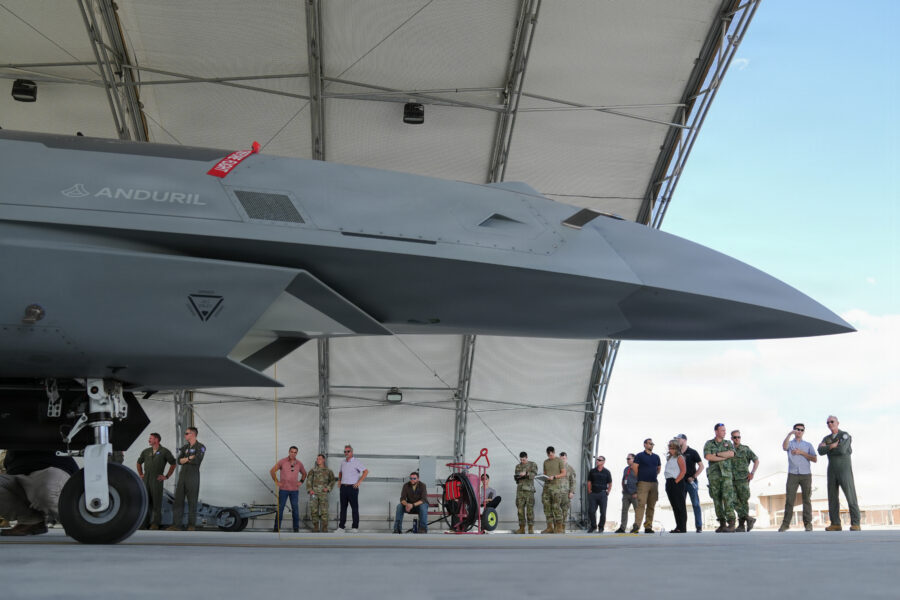
The U.S. Air Force's Experimental Operations Unit recently held a change of command ceremony, a milestone that carries weight beyond the routine transfer of leadership. More than a year into its work developing Collaborative Combat Aircraft concepts, the unit's continued operation — and orderly command succession — points to an organization that has moved from provisional experiment toward something more durable within Air Force structure★.
From Concept to High-Tempo Operations
The clearest indicator of that maturation is operational tempo. Exercises conducted by the unit have generated multiple sorties in a single day — a threshold that reflects serious stress-testing of how crewed and autonomous aircraft coordinate under conditions meant to approximate the pace of actual combat★.
Those exercises are explicitly designed to simulate high-tempo combat operations, suggesting the unit is no longer simply asking whether CCA concepts work in principle, but whether they hold up when pushed hard. That shift in framing — from feasibility to durability — is itself a sign of institutional maturation.
Doctrine Taking Shape
The change of command is significant partly for what it is not: it is not a deactivation, a merger, or a restructuring signal★. The fact that the Experimental Operations Unit is instead receiving a new commander and continuing its mission suggests Air Force leadership views CCA development as requiring sustained, dedicated focus rather than a quick handoff.
Over a year of continuous operation has allowed the unit to accumulate institutional knowledge★.
But the Experimental Operations Unit's trajectory suggests the foundational doctrinal work is well underway★.
★ AI inference: One or more analytical conclusions in this article were drawn by the AI from cited facts and are not directly stated in the cited sources.