
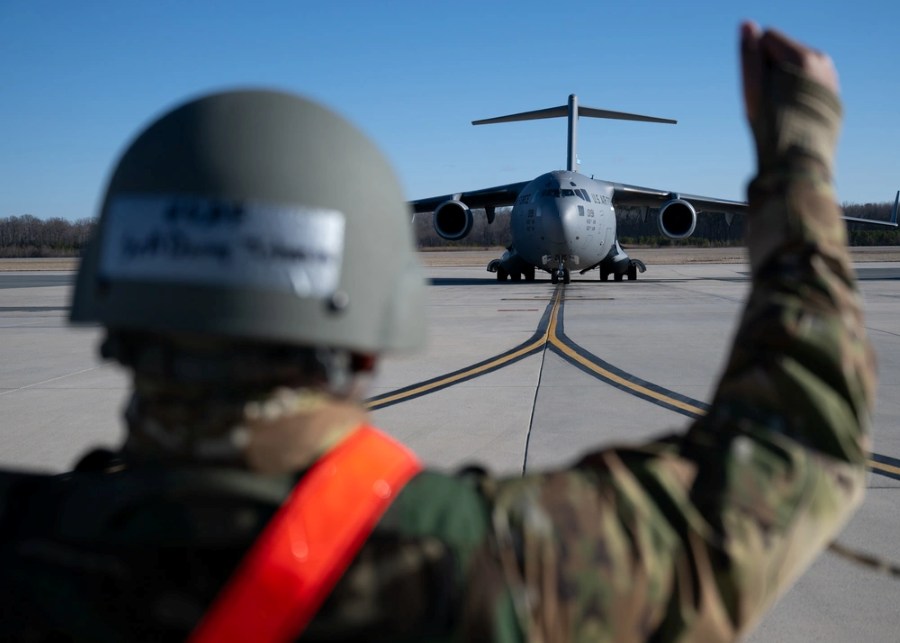
A U.S. Air Force C-17A Globemaster III that departed Christchurch, New Zealand, bound for Antarctica on August 20, 2026, was forced to turn back after crews received a notice flagging potentially hazardous Russian space activity along the flight path. The incident, confirmed by U.S. Pacific Command and reported across multiple defense outlets, underscores how orbital operations are beginning to impose direct, real-world constraints on conventional military missions.
New Zealand's Civil Aviation Authority played a role in the diversion, having issued a NOTAM — a Notice to Airmen — that alerted the crew to the hazard. According to CNN, a CAA spokesperson confirmed the agency was aware the Air Force flight turned around following the warning it had issued. The C-17, a workhorse of military airlift operations, supports the United States' Antarctic logistics mission.
A Warning With a Russian Origin
Multiple defense outlets — Defense News, Military Times, Air Force Times, and Stars and Stripes — all attributed the hazard notice to Russian space activity. Stars and Stripes characterized the warning more specifically as a "Russian missile alert," a framing that points to potential debris or an active orbital event rather than routine satellite maneuvering★. The precise nature of the Russian activity has not been publicly detailed by U.S. officials, and the sources do not clarify whether the risk was from a satellite, a debris-generating event, or something else.
U.S. Pacific Command's acknowledgment of the incident gives the episode official weight.
Orbital Risk as Operational Reality
What makes this incident notable is not just the diversion itself but what it illustrates about the evolving relationship between space activity and conventional military operations. The Antarctic corridor, already logistically demanding, now appears to require active space situational awareness as an operational input.
The episode does not, on its own, resolve questions about whether Russian space activity is being used deliberately to complicate U.S. operations or whether this was an incidental hazard. The sources report the attribution to Russia but do not provide evidence of intent. What is clear is that a military supply flight — the kind of mission that rarely makes news — was grounded by a warning with roots in orbital activity, and that fact alone represents a meaningful data point for how space and conventional operations are converging.
★ AI inference: One or more analytical conclusions in this article were drawn by the AI from cited facts and are not directly stated in the cited sources.