
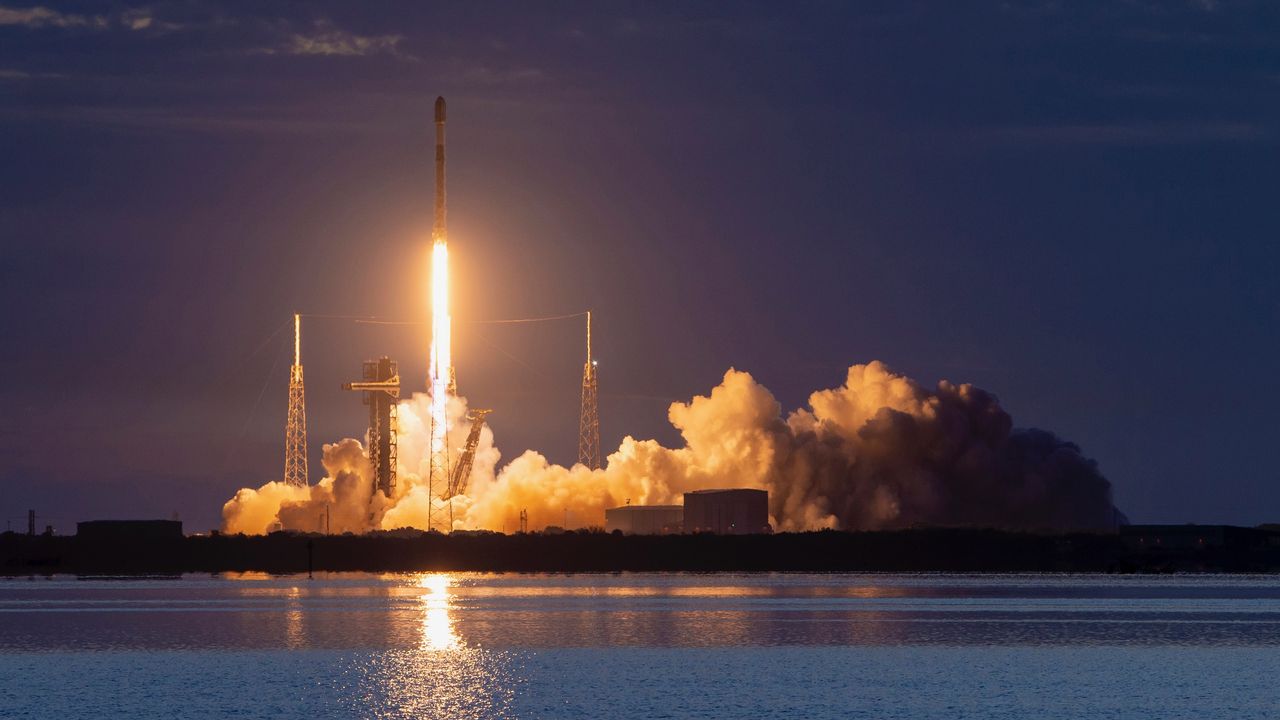
SpaceX was set to reach a pair of milestones in the early hours of August 25, when the Starlink 10-49 mission was scheduled to lift off from pad 40 at Cape Canaveral Space Force Station at 5:33 a.m. EDT (0933 UTC). The flight would mark the 100th time a Falcon 9 has launched in 2026, while the booster assigned to the mission was poised to set a new record with its 37th flight — surpassing any previous reuse mark for an orbital-class rocket★.
The twin milestones arrive against a backdrop of relentless operational tempo. Just days earlier, on August 21, SpaceX crossed a separate but related threshold when it completed its 100th orbital mission of the year across all vehicles — with the Starlink 15-20 flight logging as the 99th Falcon 9 launch of 2026, setting the stage for the August 25 Falcon-specific century mark. And on August 20, the Starlink 10-39 mission carried the 2,000th Starlink satellite to reach orbit in 2026 alone, a figure that reflects the sheer volume of broadband infrastructure SpaceX has placed in low Earth orbit this year.
What the Numbers Mean for Launch Infrastructure
Reaching 100 Falcon 9 launches before the end of August — roughly one launch every 2.4 days★ — reflects an operational discipline that has defined SpaceX's operational tempo this year. The record booster reuse figure is equally significant: each time a first stage flies again, it represents recovered hardware costs and a shorter turnaround on the pad, compounding over dozens of missions into substantial capacity advantages. Together, these metrics point to a U.S. commercial launch base that can field satellite constellations at a pace that would have been implausible a decade ago.
The implications extend beyond Starlink's consumer broadband service. A launch provider capable of sustaining this cadence with proven, repeatedly flown hardware represents a meaningful reserve of rapid-deployment capacity for satellite communications infrastructure — whether commercial, governmental, or defense-adjacent. Both Spaceflight Now and Space.com confirmed the mission details and dual-milestone significance, corroborating the figures independently.
★ AI inference: One or more analytical conclusions in this article were drawn by the AI from cited facts and are not directly stated in the cited sources.