
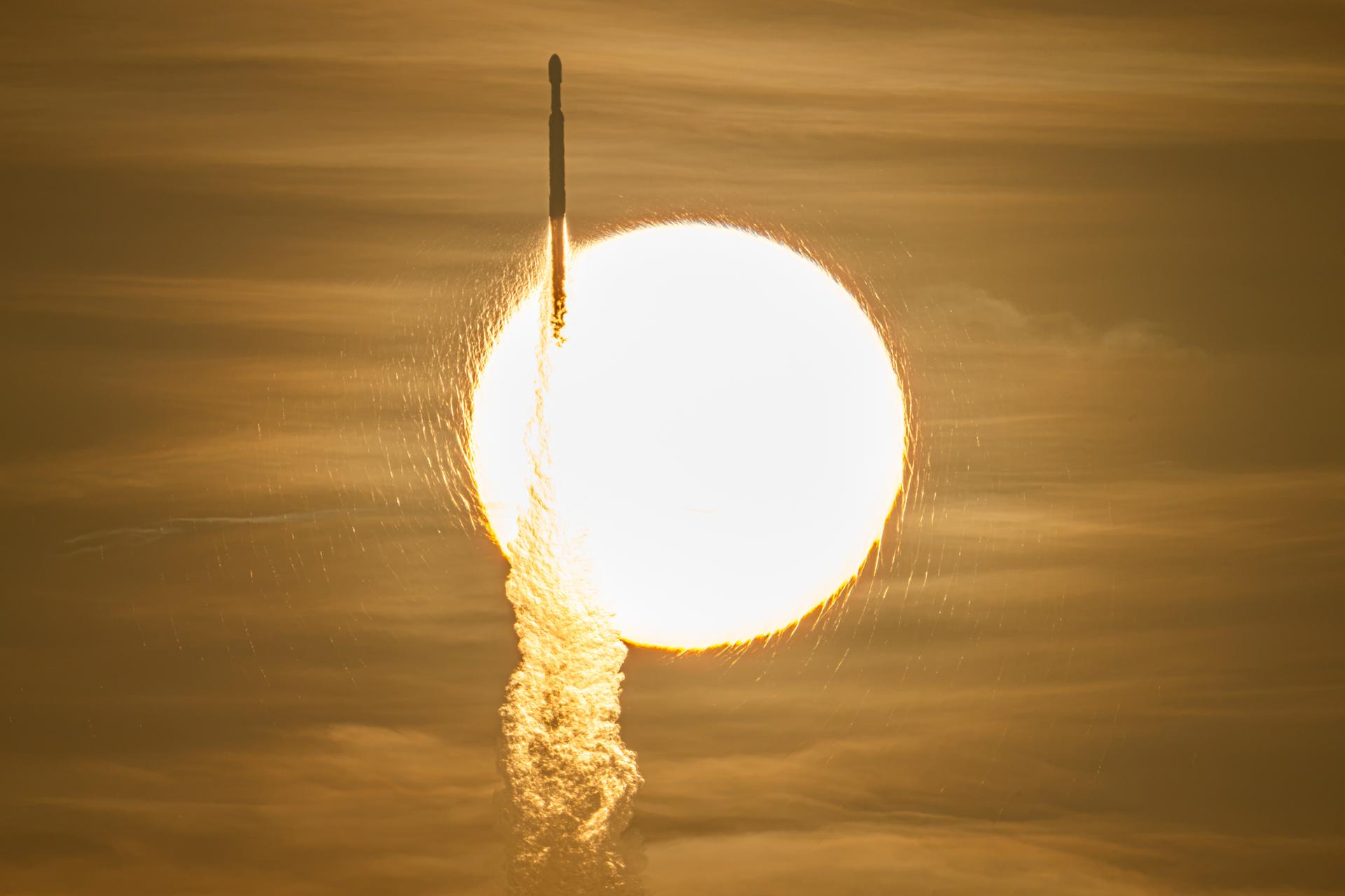
NASA's Nancy Grace Roman Space Telescope lifted off at 7:26 a.m. EDT on Sunday, August 30, 2026, riding a SpaceX Falcon Heavy rocket from Launch Complex 39A at Kennedy Space Center in Florida. The launch marked the successful deployment of one of NASA's most ambitious astronomical observatories, completing a major milestone in a program designed to deepen humanity's understanding of the cosmos★.
The ascent proceeded through a carefully sequenced series of upper-stage maneuvers. The Falcon Heavy's second stage restarted its Merlin Vacuum engine for a second planned burn — designated SES-2 — which lasted approximately two minutes before engine cutoff. With that final burn complete, Roman separated cleanly from the second stage and began flying independently. NASA concluded its live launch coverage shortly after, confirming the spacecraft was healthy and on course★.
Mission and Science Objectives
Beyond those headline objectives, Roman is expected to support a broad range of astronomical discovery, using a wide field of view that sets it apart from predecessor observatories★ and allows it to survey large swaths of the sky in detail★.
With spacecraft separation confirmed and the observatory flying on its own, mission teams will spend the coming months commissioning Roman's systems ahead of the start of science operations.
★ AI inference: One or more analytical conclusions in this article were drawn by the AI from cited facts and are not directly stated in the cited sources.