
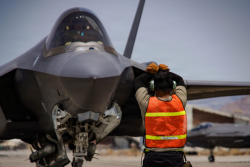
The sticker price on America's primary frontline fighter jet is climbing again.
Variants and the Broader Cost Picture
Each variant carries its own cost structure, and the F-35A figure represents only one data point in a wider pricing landscape that varies considerably across the program.
For force structure planners, per-unit cost increases of this magnitude carry real consequences. Every additional million dollars spent per airframe translates directly into fewer aircraft that can be purchased within a fixed procurement budget. A roughly 11.5 percent price increase means that a hypothetical buy of 100 aircraft now costs the equivalent of what 111 or 112 would have at previous pricing★ — effectively shrinking the fleet before a single aircraft rolls off the line.
The broader implication is that sustained inflation and continuous upgrade integration — both of which appear to be ongoing features of the F-35 program rather than one-time anomalies★ — could force difficult trade-offs: accepting a smaller fleet, seeking supplemental appropriations, or slowing the rate of procurement to manage annual outlays. None of those options comes without operational or political cost.
★ AI inference: One or more analytical conclusions in this article were drawn by the AI from cited facts and are not directly stated in the cited sources.