
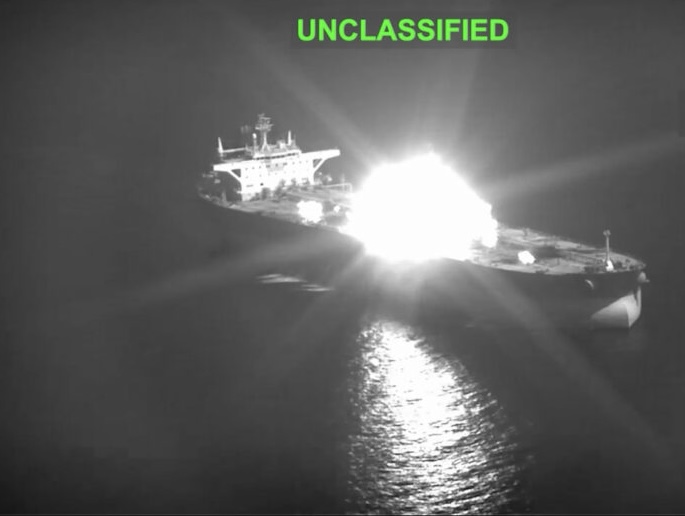
U.S. forces struck three Iranian oil tankers on Saturday, September 5, 2026, in what the Trump administration has framed as a combined act of self-defense and deliberate economic warfare against Iran★. The strikes were carried out by fighter aircraft and drones after Iran launched ballistic missiles targeting two U.S. Navy warships operating in the region.
U.S. Central Command confirmed the three tankers were hit at separate locations: one off the coast of Kharg Island; a second near the port of Jask; and a third in the Gulf of Oman. The geographic spread of the strikes — extending from Iran's Persian Gulf coastline into open ocean — signals a deliberate effort to disrupt Iranian oil transit across multiple corridors simultaneously★.
Control of the Strait of Hormuz
The Trump administration has explicitly framed military action as a tool for raising the economic costs Iran bears for its behavior — and striking oil tankers directly targets the revenue streams Iran depends on to fund its government and military programs★. Saturday's strikes represent one of the most direct applications of that strategy to date.
Iran's decision to fire ballistic missiles at U.S. Navy vessels before the retaliatory strikes marks a significant escalation in the tactics Tehran is willing to employ★.
The events of September 5 underscore how rapidly With oil infrastructure now in the crosshairs and ballistic missiles entering the equation, both the military and economic dimensions of the standoff have sharpened considerably.
★ AI inference: One or more analytical conclusions in this article were drawn by the AI from cited facts and are not directly stated in the cited sources.