
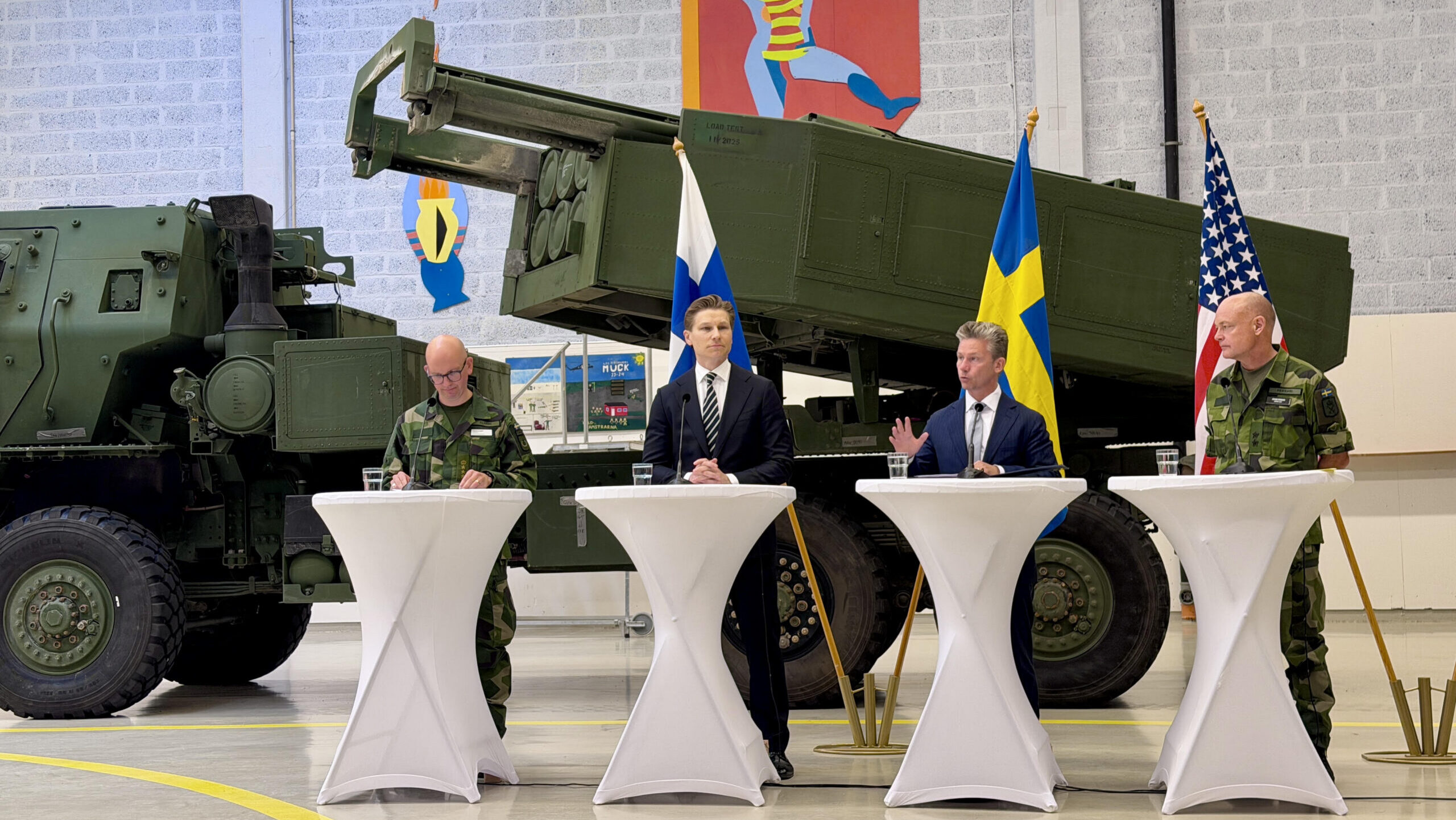
Sweden has finalized a deal worth approximately SEK 7 billion — reported as roughly $729–732 million depending on the exchange rate at signing — to acquire just over ten HIMARS multiple-launch rocket systems along with a substantial quantity of ammunition, the Swedish defense ministry confirmed at a press conference in early September 2026. The purchase from Lockheed Martin was announced by Defense Minister Pål Jonson.
Alongside the hardware agreement, Sweden and Finland signed a declaration on rocket-artillery cooperation. The partnership is operationally logical: Finland already operates the tracked M270 Multiple Launch Rocket System, which shares ammunition and some components with HIMARS. That interoperability reduces logistics complexity and creates a foundation for joint training, combined fires doctrine, and potentially shared stockpiling★.
A Continent Hedging Its Bets
Sweden and Finland are not alone in reconsidering how — and from whom — they source long-range precision fires. Croatia, which has already procured HIMARS from the United States, has separately purchased South Korean rocket artillery systems, signaling a deliberate diversification strategy rather than a single-supplier approach★.
That warning has amplified incentives across Europe to develop domestic or allied alternatives★. While that project is still conditional, it illustrates the same underlying logic driving Sweden's and Croatia's acquisitions: European governments and their partners are actively working to shorten and diversify the supply chains that underpin conventional deterrence.
Taken together, these moves — Sweden's HIMARS purchase, the Swedish-Finnish artillery pact, Croatia's South Korean buy, and Germany's emerging production partnerships — point to a durable structural shift. European NATO members are increasingly treating self-reliance and supply-chain resilience not as aspirational goals but as near-term procurement requirements, with rocket artillery at the center of that recalibration★.
★ AI inference: One or more analytical conclusions in this article were drawn by the AI from cited facts and are not directly stated in the cited sources.