
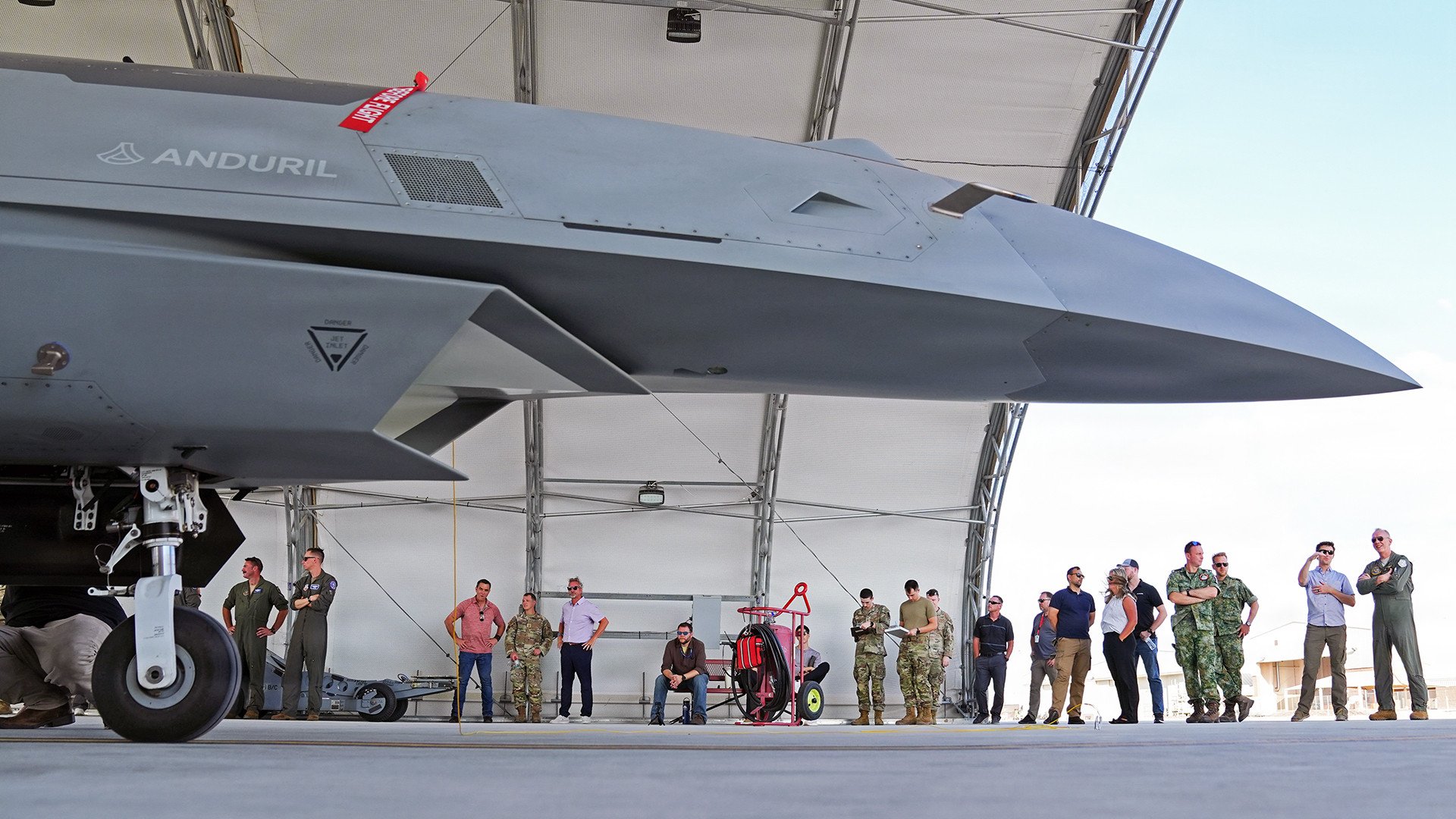
The U.S. Air Force is setting ambitious targets for autonomous aerial systems, with Air Force Secretary Troy Meink announcing on September 14, 2026, plans to field at least 500 semi-autonomous Collaborative Combat Aircraft (CCAs) alongside 500 low-cost reconnaissance and strike drones by 2032. The dual-track program signals a broad institutional commitment to AI-enabled combat systems as a core pillar of future air power.
The 500-CCA goal represents a meaningful step up from what the service had previously stated publicly, according to reporting by TWZ. The additional 500 drones fall under a separate category called Massed Modular Aircraft (MMA)—a cheaper class of platform intended to replace functions currently handled by MQ-9 Reaper-type systems, combining intelligence-gathering and strike roles at scale.
Two Platforms, Two Designations
Meink also formalized the names of the two competing CCA designs already under development. General Atomics' entry has been officially designated the FQ-42A Vengeance, while Anduril's platform has been designated the FQ-44A Fury. Both designations carry the "FQ" prefix, consistent with the Air Force's unmanned aircraft naming conventions and signaling that these systems are classified as fighter-adjacent autonomous platforms rather than traditional remotely piloted aircraft★.
Strategic Context
Cheap, modular, and attritable drones like the MMA concept allow commanders to saturate contested airspace in ways that expensive crewed platforms cannot sustain.
Whether acquisition timelines, budgets, and industrial capacity can keep pace with those targets remains an open question as the programs move from development into procurement.
★ AI inference: One or more analytical conclusions in this article were drawn by the AI from cited facts and are not directly stated in the cited sources.