
Europe's push for autonomous space capabilities has moved from political rhetoric into funded programs, driven in part by a concrete operational vulnerability: during recent crises, the United States restricted access to satellite data that European governments and militaries had been treating as a reliable operational resource. That experience, documented by Defense News and C4ISRNet in reporting published September 23, 2026, has accelerated a shift already underway across the continent, with European countries now scrambling to develop sovereign alternatives and reduce structural dependency on U.S.-controlled space systems.
That recognition has catalyzed a reorientation not just at the program level but across the procurement strategies of multiple European governments, according to Defense News★.
A Nature analysis published September 17, 2026 placed that reorientation in a broader geopolitical context, documenting growing momentum in Europe for sovereign capabilities spanning satellite constellations, launch services, and human spaceflight★. The common thread is reducing dependence on the United States at a moment when divisions across the Atlantic are deepening. The breadth of domains under consideration — from data infrastructure to independent human access to orbit — signals that European institutions are approaching space sovereignty as a comprehensive strategic objective rather than a set of discrete capability gaps to fill★.
Leonardo and the Earth Observation Priority
The most concrete programmatic step in the current reporting cycle came from a company that announced September 17, 2026 that it had been selected to help shape Europe's future sovereign Earth observation capability. The company's press release framed the selection in explicitly strategic language: Europe's strategic autonomy, it stated, increasingly depends on its ability to access, understand, and use critical data from space. The announcement positions Leonardo at the design-shaping stage of what is described as a future sovereign EO system, though the commissioning authority is not identified in publicly available materials★.
Earth observation holds a privileged position in the sovereignty debate because satellite imagery and derived geospatial products underpin the widest range of defense and civil applications — from military situational awareness and crisis response to infrastructure monitoring and environmental assessment. A dependency on EO data pipelines that can be gated by a foreign government creates structural vulnerability across all of those use cases simultaneously. The fact that Leonardo's role is framed as shaping a future capability rather than executing an already-defined constellation acquisition suggests that Europe remains in requirements-definition and architecture-development phases for next-generation sovereign EO, with hardware procurement and launch activity downstream from the current engagement★.
Sovereign EO capability is not simply a matter of putting satellites in orbit. Leonardo's selection as an architect of the overall capability — rather than a provider of a single subsystem★ — reflects the scope of what European institutions are seeking to build, rather than what they can readily source from existing providers under current political conditions.
Market Reshaping: Demand Redirection and Industrial Opportunity
Defense News characterizes the cumulative effect of European sovereignty investments as a structural reshaping of the defense space market, and the mechanisms operate on both demand and supply sides. On the demand side, European governments and militaries that previously sourced satellite services and data through U.S.-led commercial channels or allied intelligence-sharing arrangements are directing that procurement toward domestic or allied-European alternatives. On the supply side, defense companies with European presence or seeking to establish it are repositioning their offerings to capture that redirected demand.
The framing that European countries are scrambling to catch up carries specific market implications. Emergency-driven capability builds, responding to demonstrated gaps rather than orderly strategic plans, tend to favor vendors who can demonstrate near-term delivery over those offering optimized but longer-cycle solutions.★ For the European space industrial base, that dynamic could compress procurement timelines in ways that benefit established integrators while also opening space for commercially agile smallsat manufacturers and data service providers capable of supplying interim capacity during the development of larger flagship programs★.
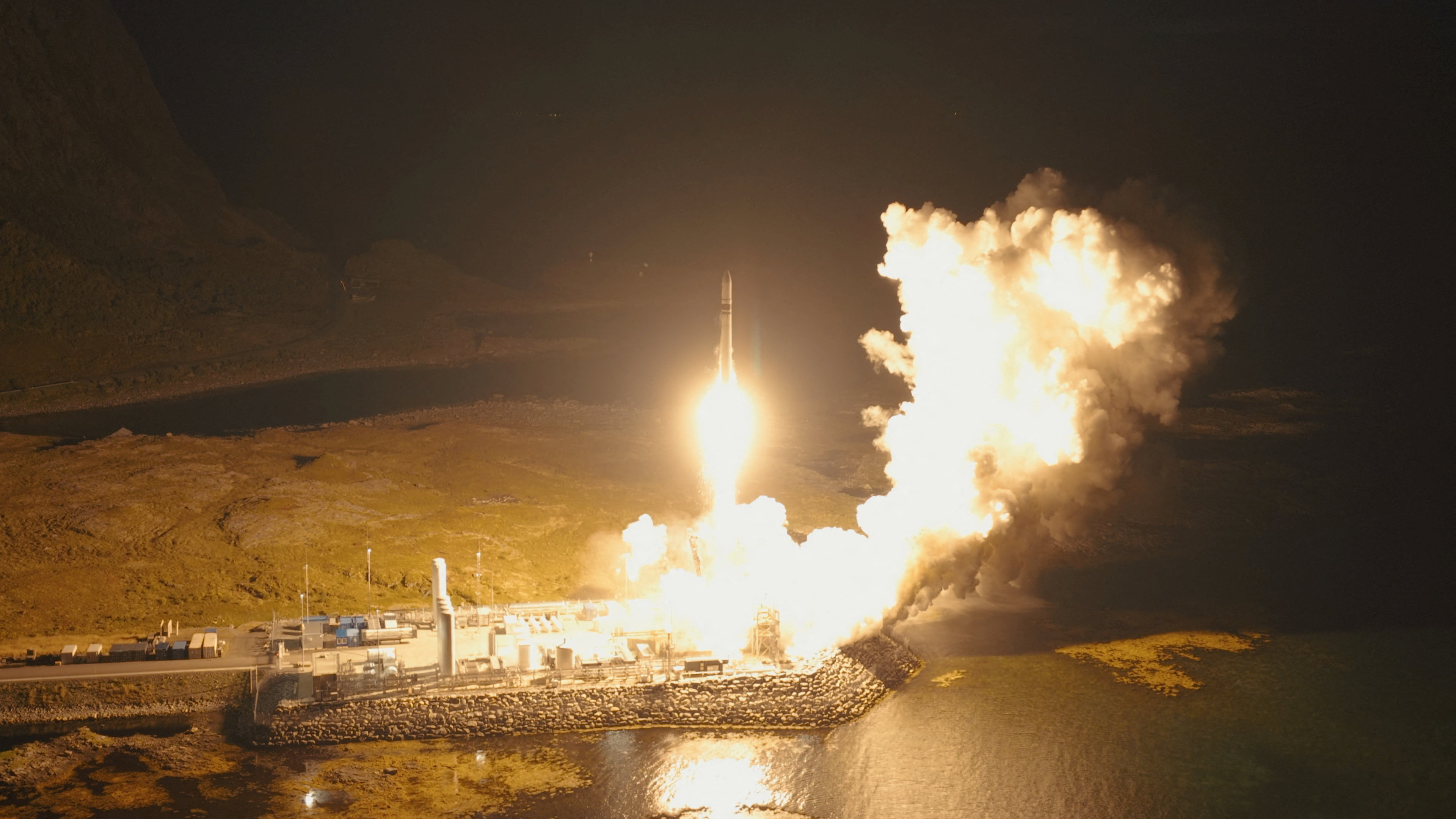
The scope of opportunity extends well beyond the satellite hardware segment. The Nature reporting adds that European ambitions extend to launch services as well, meaning European launch providers and their supply chains are also positioned as beneficiaries of this capital reallocation★.
The U.S. Parallel Track: PWSA Tranche 1 Advances
Even as European procurement reorients away from U.S. dependency, the United States is pressing ahead with its own proliferated defense space architecture. The U.S. Space Force Space Development Agency has a Tranche 1 Transport Layer mission — one of six under the Proliferated Warfighter Space Architecture program — scheduled for launch no earlier than October 31, 2026, on a SpaceX Falcon 9 from Space Launch Complex 4E at Vandenberg Space Force Base into polar orbit. The mission carries a Government/Top Secret classification.
The continued build-out of this architecture is relevant to the European sovereignty discussion on two levels. First, it progressively widens the capability asymmetry between U.S. and European defense space: as the U.S. fields a more capable and resilient proliferated LEO system, the gap that European programs must close continues to grow★. Second, the use of a SpaceX Falcon 9 for a classified national security payload illustrates the degree to which American commercial launch has been integrated into U.S. military space operations★ — an integration that European governments cannot assume will be available to them under all geopolitical circumstances, reinforcing the case for sovereign European launch infrastructure as a companion investment to sovereign EO.
Near-Term Milestones and Open Questions
Leonardo's current engagement is at the design-shaping stage, meaning funded satellite acquisition and constellation construction lie downstream★. The critical near-term question is how quickly that conceptual phase resolves into formal acquisition programs with defined requirements, schedules, and budgets.
For the broader European space sovereignty agenda, the milestones to track are national budget decisions and EU-level programmatic commitments that would give the current momentum financial substance. Whether sovereign EO results in a single pan-European constellation, a coordinated family of national programs with interoperability agreements, or some combination of both will significantly shape how the industrial base — and Leonardo's role within it — evolves over the coming years. The SDA Tranche 1 Transport Layer launch, if it proceeds on its late-October 2026 schedule, will add another visible increment to U.S. defense space capacity★, and that visibility is likely to sustain the political urgency that is currently driving European investment decisions across the full range of sovereign space programs.
★ AI inference: One or more analytical conclusions in this article were drawn by the AI from cited facts and are not directly stated in the cited sources.