
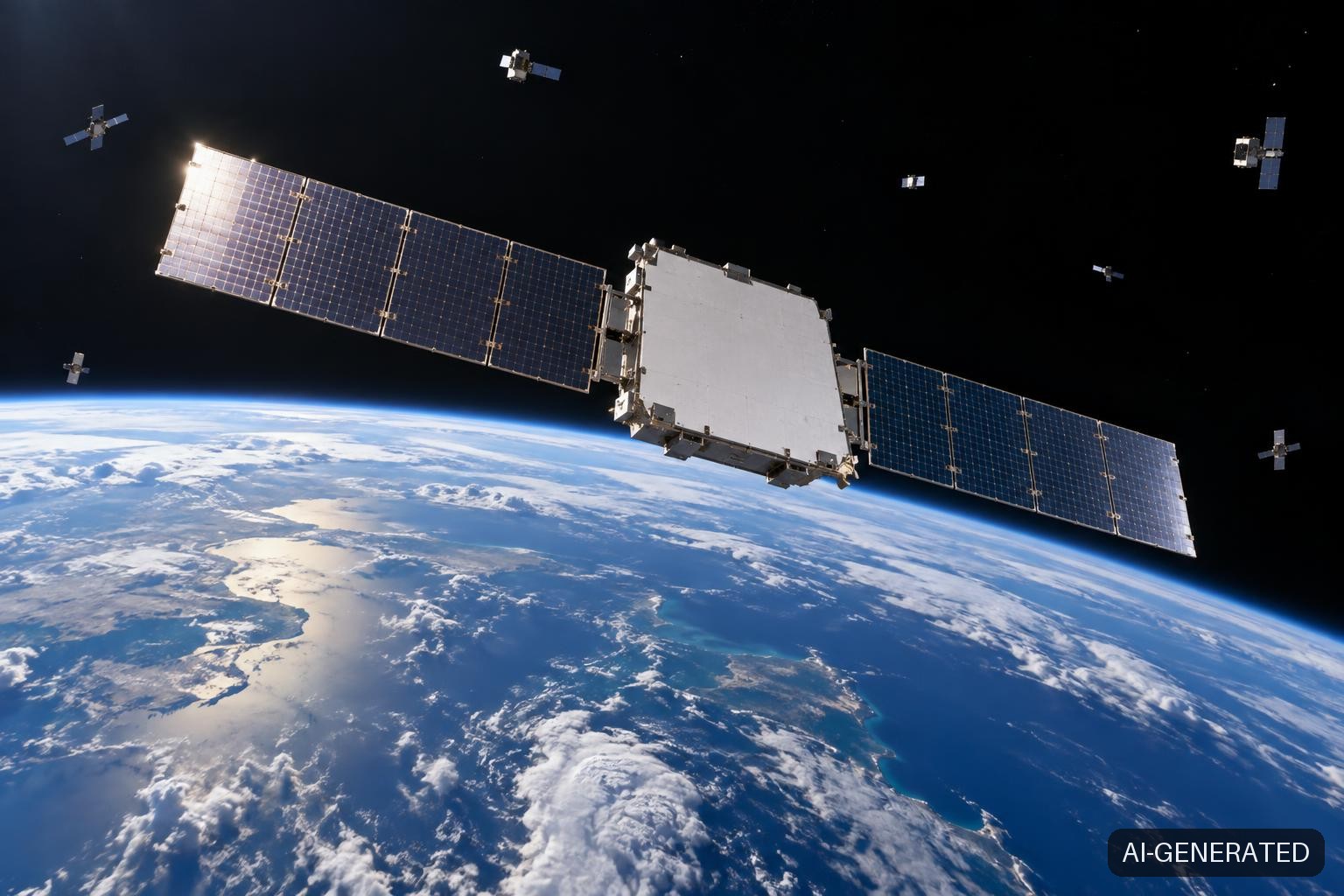
SpaceX has been granted unique access to classified Department of Defense space tracking data, according to reporting by Breaking Defense published September 23, 2026. The arrangement — confirmed by multiple independent sources cited by Breaking Defense — gives the company access to the most comprehensive DoD space surveillance information available for internal operational use, a level of classified data access that no other commercial space operator currently holds. Commercial space monitoring firms have responded with alarm, arguing the access confers a structural competitive advantage that could reshape the emerging market for space situational awareness (SSA) services.
What the Data Access Covers and Why It Matters
According to Benzinga's summary of the Breaking Defense report, competitors are specifically concerned that classified covariance data could indirectly enhance SpaceX's externally facing Stargaze collision-analysis products, even if SpaceX never directly resells or redistributes the government data itself.
Stargaze is SpaceX's space traffic management platform, introduced as a commercial SSA service that the company states will make conjunction data available to all satellite operators, free of charge. SpaceX's own product page describes Stargaze as designed to maximize safety for all satellites in space. On its face, that framing positions Stargaze as a public benefit. The competitive concern, however, is structural rather than about direct data redistribution: if SpaceX's internal operations benefit from classified tracking data that informs the algorithms or calibrations underlying Stargaze's outputs, competitors argue the result is a product offering that draws on sovereign intelligence resources unavailable to any rival through commercial means alone. Competitors contend this would represent a combination of advantages that no independent SSA provider could replicate without equivalent government access — though SpaceX has not publicly addressed that characterization, and the precise operational pathway by which classified data might influence commercial product quality has not been detailed in available reporting.
Benzinga's coverage of the Breaking Defense report characterized the competitive response as rivals crying foul over what it termed a "Stargaze advantage" — the concern that classified government tracking data, formally restricted to internal use, could nonetheless strengthen SpaceX's commercial-facing collision-analysis products in ways that other SSA firms, without comparable government access, cannot replicate.
The contractual or programmatic basis under which SpaceX secured this access has not been publicly disclosed.★ Breaking Defense's sourcing indicates the arrangement exists, but the formal instrument — whether a memorandum of understanding, a classified contract modification, or an informal operational agreement between program offices and a contractor with existing classified program relationships — remains unreported.★ That ambiguity matters for any regulatory or procurement-policy response: the appropriate remediation framework differs considerably depending on whether the access was authorized through a formal competitive vehicle, a sole-source agreement, or an informal operational accommodation.
DoD's Expanding Commercial Space Relationships
The disclosure arrives as DoD is actively working through how to integrate commercial space capabilities into its operational architecture. A New Space Economy analysis published in late August 2026 outlined the broad rationale for the partnership model: commercial space data can be acquired quickly, shared more easily than many classified products, and refreshed as companies deploy new sensors and analytical techniques. The analysis specifically identified new "analytical techniques" — alongside new sensors — as a key mechanism by which commercial data value is continuously refreshed for DoD programs. That logic has driven a sustained expansion of DoD's commercial space procurement, but it has generally assumed a flow of data from industry to government — not the reverse.
SpaceX's position within that architecture is unusually deep. The company currently holds launch contracts for multiple classified Space Development Agency missions that sit at the core of the Pentagon's Proliferated Warfighter Space Architecture. An SDA Tranche 1 Transport Layer A mission, classified as a Government/Top Secret payload targeting polar orbit, is scheduled for launch no earlier than October 31, 2026, from Vandenberg Space Force Base aboard a Falcon 9. According to the Space Devs launch database, that mission is one of six launches the United States Space Force's Space Development Agency has contracted under the PWSA Tranche 1 Transport Layer constellation program, with liftoff planned from Space Launch Complex 4E. A follow-on Tranche 2 Transport Layer D mission, also classified and also assigned to SpaceX, is scheduled no earlier than December 31, 2026, from Cape Canaveral. The Space Devs database likewise records that mission as carrying a Government/Top Secret classification, targeting polar orbit from Cape Canaveral Space Force Station. Both missions are part of the SDA's effort to build out a proliferated low-Earth-orbit communications and data transport constellation for the joint warfighting force.★
The combination of launch contracts for classified defense missions and now reported access to classified space tracking data reflects SpaceX's position as the most deeply integrated commercial operator in DoD's space enterprise.★ Whether that accumulated position is a natural consequence of sustained competitive performance or a structural artifact that warrants policy attention is the question the latest disclosure has placed in front of the industry.
Competitive Concerns and the Policy Debate Ahead
For commercial SSA providers, the concern is not hypothetical.
The classified data access, if confirmed to influence Stargaze outputs, would add a government-derived dimension to those advantages that competitors argue could not be matched through private investment alone★.
DoD faces a genuinely difficult balancing question. Its operational interest lies in having SpaceX operate Starlink and future classified launch missions as safely as possible, which argues for equipping the company with the best available tracking data. The policy concern is whether that operational benefit to the government creates a downstream market distortion that undermines the competitive SSA ecosystem DoD also depends on for independent data and services. The two interests are not obviously reconcilable without a mechanism — a formal data-sharing framework, an independent licensing structure, or an equivalent-access program for qualified commercial SSA providers — that does not appear to currently exist.
Whether DoD's arrangements with SpaceX were conducted through a formal procurement instrument or through less structured program-office accommodation remains unknown from available reporting. Commercial SSA firms, for their part, may have limited near-term recourse beyond raising the concern through industry channels and press reporting, as the sourced record does not describe any formal regulatory complaint mechanism or congressional inquiry currently underway★. Upcoming SDA launch milestones in late 2026 — including both the Tranche 1 and Tranche 2 Transport Layer missions assigned to SpaceX — could attract additional legislative or regulatory scrutiny of the broader question of how DoD structures access to classified space data in its commercial partnerships, though no congressional action on this specific issue has been reported to date★.
The disclosure of SpaceX's classified data access fits a broader pattern of pressure on the assumptions underlying DoD's commercial space partnership model — in particular, the assumption that expanding commercial access to defense space programs will produce broadly distributed competitive benefits rather than concentrating advantages among the largest existing contractors★.
★ AI inference: One or more analytical conclusions in this article were drawn by the AI from cited facts and are not directly stated in the cited sources.