
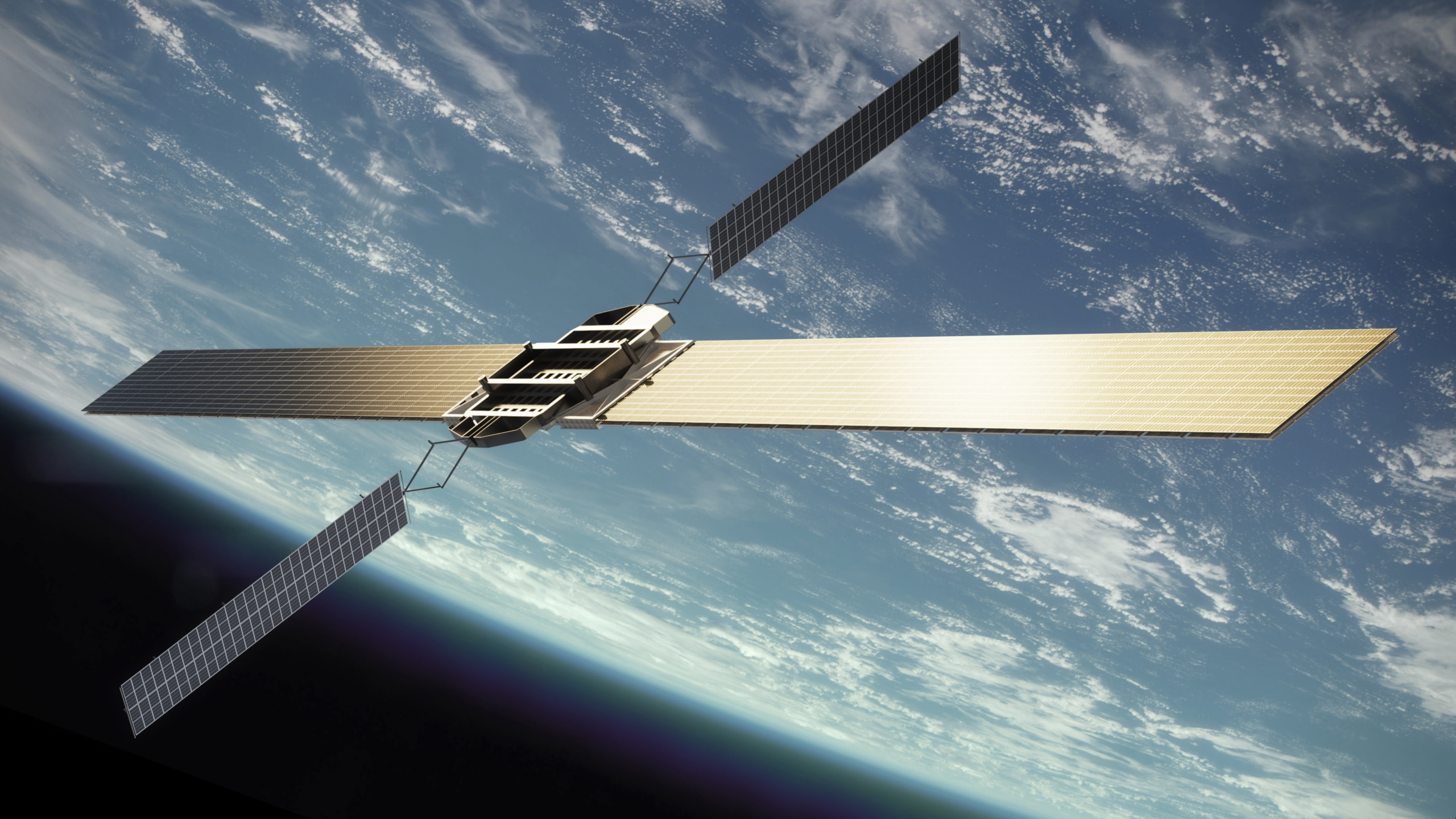
Three commercial space startups announced significant funding milestones in the span of two days in late June 2026, collectively raising $58M across capabilities that span orbital edge computing, AI-driven maritime surveillance, and satellite reentry technology.
Sophia Space: $7M and a 2027 Demo Flight
Orbital compute startup Sophia Space raised $7M and announced a partnership with Apex for a planned 2027 demonstration flight. The mission is intended to validate the company's edge compute hardware in orbit★ — a critical step toward establishing a commercial in-space computing capability. Deploying processing power at the orbital layer, rather than routing data back to ground stations, is an approach with applications ranging from commercial remote sensing to time-sensitive intelligence processing.
Ubotica: $11M for AI-Powered Maritime Intelligence
Dublin-based Ubotica raised $11M to accelerate commercialization of its AI-powered satellite intelligence platform, which is focused on maritime security. Maritime domain awareness — identifying vessels, monitoring shipping lanes, and flagging anomalous behavior — is a recognized priority for both government intelligence customers and commercial insurers and shipping firms, making Ubotica's product well-positioned across a range of buyers.
ElevationSpace: $40M Series B
Japanese satellite reentry startup ElevationSpace closed a $40M Series B, bringing its total capital raised to $63.5M. The company is developing technology to return satellites from orbit — a capability with relevance both for servicing missions and for recovering hardware after on-orbit experiments. The round represents a substantial vote of confidence in the commercial viability of reentry infrastructure as a standalone service.
A Broader Pattern of Commercial Space Investment
Taken together, the three rounds reflect a continued build-out of commercial capabilities at the intersection of orbital hardware and data services. Grovewire has previously reported on related investment and acquisition activity across the sector — signaling that both private capital and government-linked buyers are actively funding the infrastructure layer beneath next-generation defense and intelligence space architectures.
While the sources do not detail specific government contracts for all three companies, the capabilities each is developing — real-time maritime AI, low-latency orbital compute, and recoverable satellite platforms — align closely with the kinds of persistent awareness and flexible infrastructure that defense and intelligence agencies have been seeking from the commercial sector. Whether these startups secure government revenue to match their private backing will be a key indicator of how quickly the market matures.
★ AI inference: One or more analytical conclusions in this article were drawn by the AI from cited facts and are not directly stated in the cited sources.