
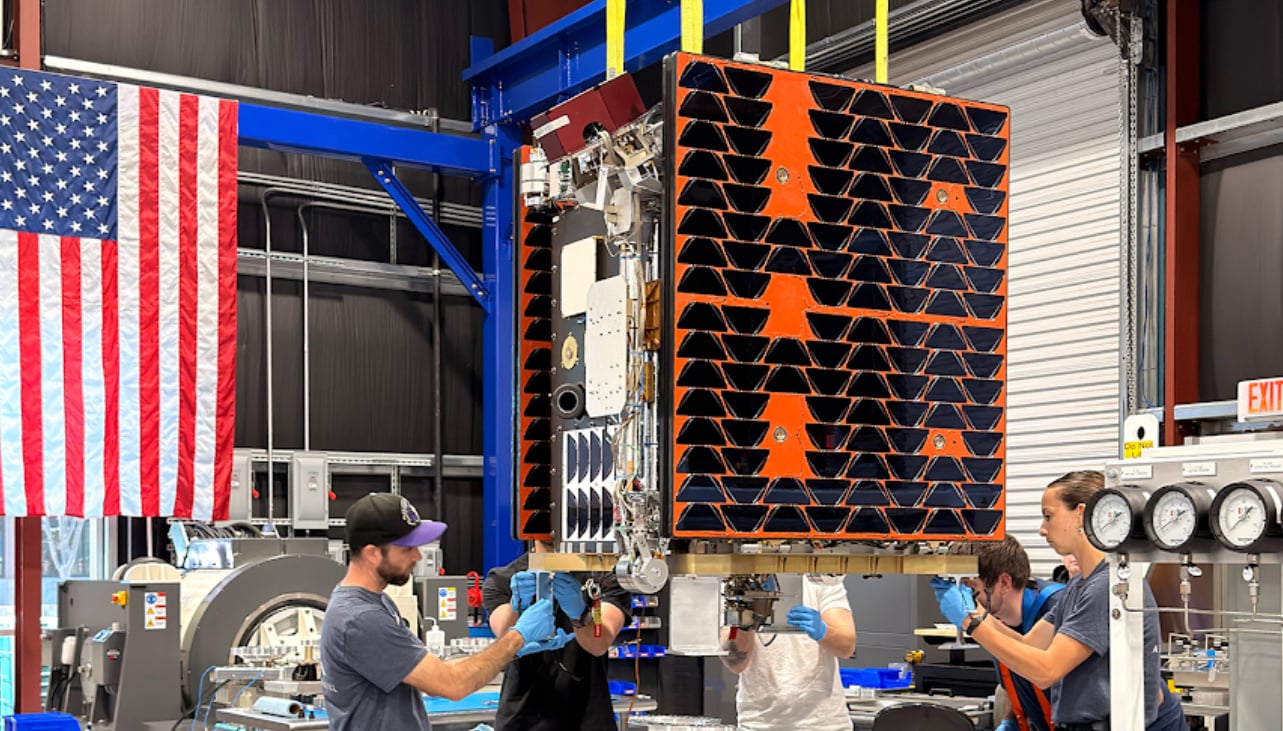
Starfish Space is preparing to launch its first operational Otter spacecraft next month aboard SpaceX's Transporter-18 rideshare flight, marking the company's formal transition from development program to active orbital services provider★. The mission — NASA's Small Spacecraft Propulsion and Inspection Capability, abbreviated SSPICY — will deploy Otter to low Earth orbit to perform close-range inspections of multiple defunct U.S. satellites. NASA has designated SSPICY the first agency-funded commercial debris inspection mission and framed it as an explicit precursor to future capture, repair, or disposal operations.
The designation carries weight beyond the program name. SSPICY is not a conventional technology demonstration conducted against artificial targets under controlled conditions, but an operational tasking of a commercial vehicle against real, agreed-upon spacecraft in a shared orbital environment★.
Consent-Based Inspections of Defunct Satellites
The core operational design of SSPICY is structured around cooperative, consensual access. Operators of the target satellites — each identified as a defunct U.S. spacecraft — have pre-agreed to receive visits from Otter, a framework that provides clear legal and procedural grounding for the close-approach maneuvers Otter will execute in orbit★. The consent structure is deliberate: securing operator agreements before flight reduces ambiguity around intent, establishes pre-defined engagement parameters for each approach★, and positions the mission within established norms of cooperative space activity rather than contested proximity operations.
Operators assessing residual asset value and mission planners designing follow-on servicing interventions alike require detailed target characterization before committing resources to a contact-based operation.
NASA's explicit framing of SSPICY as a precursor to capture, repair, or disposal work establishes a programmatic sequence in which close inspection is the first, non-negotiable prerequisite. Any contact-based operation — docking, berthing, or physical manipulation of a defunct spacecraft — requires detailed prior knowledge of the target's behavior. A satellite tumbling at an uncharacterized rate, or with solar panels in an unknown orientation, presents dynamic and geometric hazards that make contact operations prohibitively risky without advance characterization. SSPICY's role is to produce that characterization data at scale, across multiple targets, before more complex intervention is attempted★.
The number of inspection targets has not been specified in available reporting beyond the description of "multiple" defunct satellites. Target identities have not been disclosed publicly★, which is consistent with operator consent not necessarily extending to public identification of their assets. The mission scope indicates Otter will complete more than a single encounter during the deployment, demonstrating operational tempo across multiple approach, inspect, and departure sequences in the same mission.
Transporter-18, Launch Timing, and Operational Debut
Otter is manifested on SpaceX's Transporter-18 rideshare flight★, scheduled for next month. With reporting published on September 24, 2026, that timing places the anticipated launch window in October 2026★.
For Starfish Space, the manifest is operationally significant beyond the lift. SSPICY represents the first operational deployment of the Otter platform, marking a transition from design, integration, and testing into a mission profile against real targets with a government customer and defined deliverables★. The sequence and timing of individual encounter operations have not been detailed in available reporting.
NASA's Programmatic Framing and Commercial Strategy
NASA's decision to designate SSPICY as the first agency-funded commercial debris inspection mission signals an important step in how the agency is approaching orbital sustainability. The structure of SSPICY — a commercial vehicle funded by the agency, operating against operator-consented targets, and returning characterization data as a mission deliverable — is closer to service procurement than technology development grant★, a distinction that matters for how other potential government and commercial customers might structure future servicing or inspection requirements.
Government agencies continuing to invest in new LEO capabilities. The U.S. Space Force added classified payloads to low Earth orbit on separate launches in August and September 2026, illustrating continued government investment in LEO infrastructure alongside the commercial build-out. That expansion of active assets occurs in the same orbital bands where defunct hardware from earlier satellite generations accumulates over time. Characterizing and ultimately addressing that defunct hardware is a prerequisite for responsible long-term LEO operations, and SSPICY positions Starfish Space and NASA to begin that process through systematic, consent-based inspection.
The consent-based model also carries normative relevance for the broader on-orbit servicing sector. Proximity operations near other operators' spacecraft remain technically and legally sensitive — collision risk is real, and the legal framework governing close approaches to third-party assets has historically lacked clarity. By establishing a model in which inspection visits are pre-approved, mission parameters are agreed in advance, and approach procedures are defined before flight★, Starfish Space and NASA provide a working reference for how proximity operations can be structured in a way that is operationally predictable and commercially coherent. Whether that framework influences subsequent commercial and government servicing contracts will depend on how SSPICY executes, but it establishes a concrete precedent where few existed before.
Next Steps and Sector Implications
The immediate milestone is the Transporter-18 launch, currently anticipated in October 2026★. Following deployment and vehicle checkout, Otter will begin proximity approach operations against the pre-agreed target spacecraft. How quickly Otter can demonstrate sequential inspection across multiple defunct satellites — and the quality and operational utility of the characterization data it returns — will shape how soon NASA and Starfish Space can advance planning for follow-on missions involving contact operations such as capture or controlled disposal.
NASA's explicit sequencing of inspection before intervention reflects a risk-managed programmatic approach: each step in the chain from inspection to capture to disposal introduces substantially more technical and regulatory complexity than the one before it, and SSPICY is designed to de-risk the first link★. The operational data Otter accumulates — not just the inspection results but the experience of executing real proximity maneuvers against real targets in the live orbital environment — will directly inform planning for those more demanding future missions.
For the satellite servicing sector, SSPICY sets a concrete operational reference point: a commercial vehicle, government-funded and operator-consented, conducting close-range inspection of defunct hardware in a shared orbital environment. If Otter executes the mission successfully, it establishes a baseline for a class of services that has been commercially anticipated but infrequently demonstrated at operational scale — and provides the next generation of active debris management programs with a foundation of real flight data on which to build.
★ AI inference: One or more analytical conclusions in this article were drawn by the AI from cited facts and are not directly stated in the cited sources.