
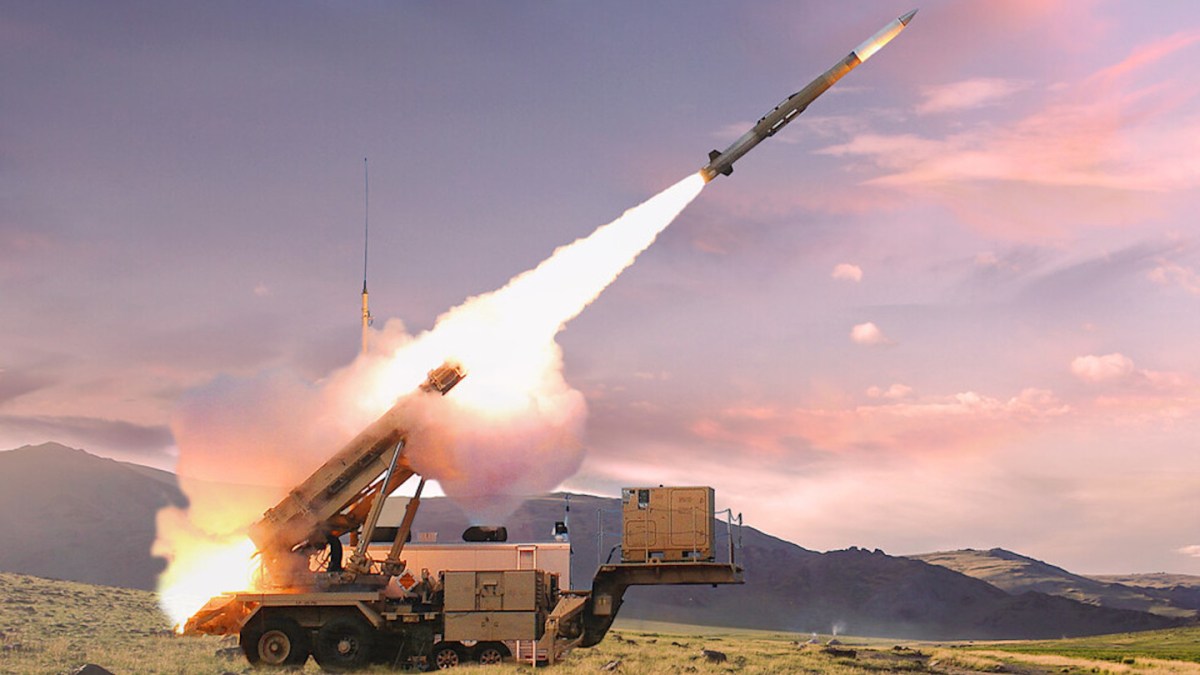
The U.S. Army has formally launched a Low-Cost Interceptor (LCI) program aimed at broadening the nation's air defense coverage without cannibalizing the high-end systems already in the inventory. Army Secretary Dan Driscoll announced the initiative, with the first live fire demonstration targeted for fall 2026.
Driscoll was explicit that the new interceptors are not intended to replace existing, more sophisticated air defense systems. Instead, the LCI is conceived as an affordable complement — a way to generate greater magazine depth and wider coverage without bearing the full cost of fielding additional exquisite interceptors for every threat scenario★.
The program is built around a strict price ceiling. Vendors are being asked to compete for complete missile systems priced under $1 million per unit, with individual subsystems targeted at below $250,000. That cost discipline is central to the program's rationale.
Army Maj. Gen. Frank Lozano, the service's Portfolio Acquisition Executive for Fires, had previously described the effort as a "very aggressive" competition, signaling the Army's intent to move quickly. The Army held an industry day on June 23 to brief potential vendors on the competition's requirements, evaluation criteria, and overall structure★, opening the field to defense contractors and missile developers who can meet the demanding cost targets.
The fall 2026 live fire goal sets a compressed timeline that underscores the urgency the Army is attaching to the program. If the demonstration proceeds on schedule, the service could move toward fielding decisions relatively quickly by Pentagon acquisition standards.
The LCI effort reflects a broader shift in U.S. defense thinking — one that Grovewire has tracked across several recent programs — toward accepting capable-but-affordable solutions to fill inventory gaps rather than exclusively pursuing next-generation systems. The Army's approach mirrors logic seen in other domains: building layered capability at scale rather than relying solely on a small number of premium platforms. Developing a lower-cost interceptor tier could also reduce pressure on production lines for more complex munitions.
No specific contractor awards have been announced; the competition remains open as vendors respond to the program's requirements.★ The fall 2026 live fire demonstration will serve as the first significant public test of whether the Army's cost and performance targets can be met simultaneously.★
★ AI inference: One or more analytical conclusions in this article were drawn by the AI from cited facts and are not directly stated in the cited sources.