
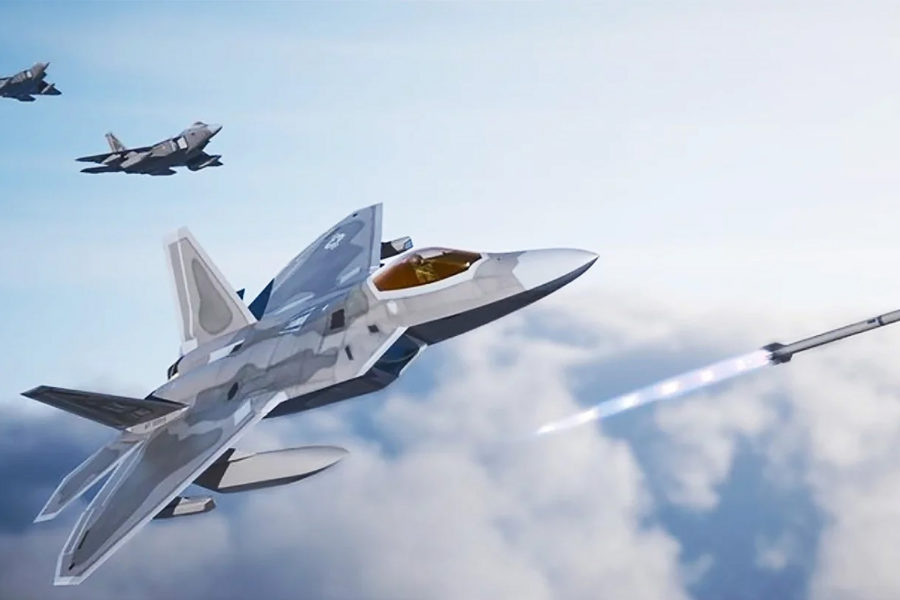
The U.S. Air Force is moving to develop a new stand-off missile with a maximum range of at least 1,000 nautical miles — roughly 1,150 statute miles — designed to engage both airborne and surface targets.
According to reporting by USNI News and Air & Space Forces Magazine, the Air Force envisions a family of next-generation long-range missiles rather than a single weapon, with the stated goal of countering Chinese air and naval forces in a potential Pacific conflict. The War Zone reported that the service is preparing to hold a classified industry day to brief defense contractors on specific requirements — an early but significant step in moving from concept to competition.
A Dual-Role Weapon at Unprecedented Range
What sets the program apart is its stated dual-role requirement: the same missile family would need to function in both air-to-air and air-to-surface missions. That combination at a 1,000-nautical-mile threshold would push engagement envelopes far beyond existing inventory.
The scale of the range requirement also has clear implications for extended deterrence. A weapon capable of 1,000 nautical miles flown from even a modest standoff position could hold targets deep inside defended territory at risk without placing the launching aircraft in contested airspace★. That calculus is particularly relevant in the Western Pacific, where anti-access and area-denial systems have long complicated Air Force strike planning★.
The program is in early development, and significant technical, budgetary, and integration challenges lie ahead before any such weapon reaches operational units. No contractor has been selected★, and the classified requirements briefing indicates the service is still in the process of socializing its concept with industry★. Nevertheless, the formal launch of the effort signals that Air Force leadership views deep-strike stand-off capability as a priority for future air superiority doctrine — not merely a niche supplementary capability★.
★ AI inference: One or more analytical conclusions in this article were drawn by the AI from cited facts and are not directly stated in the cited sources.