
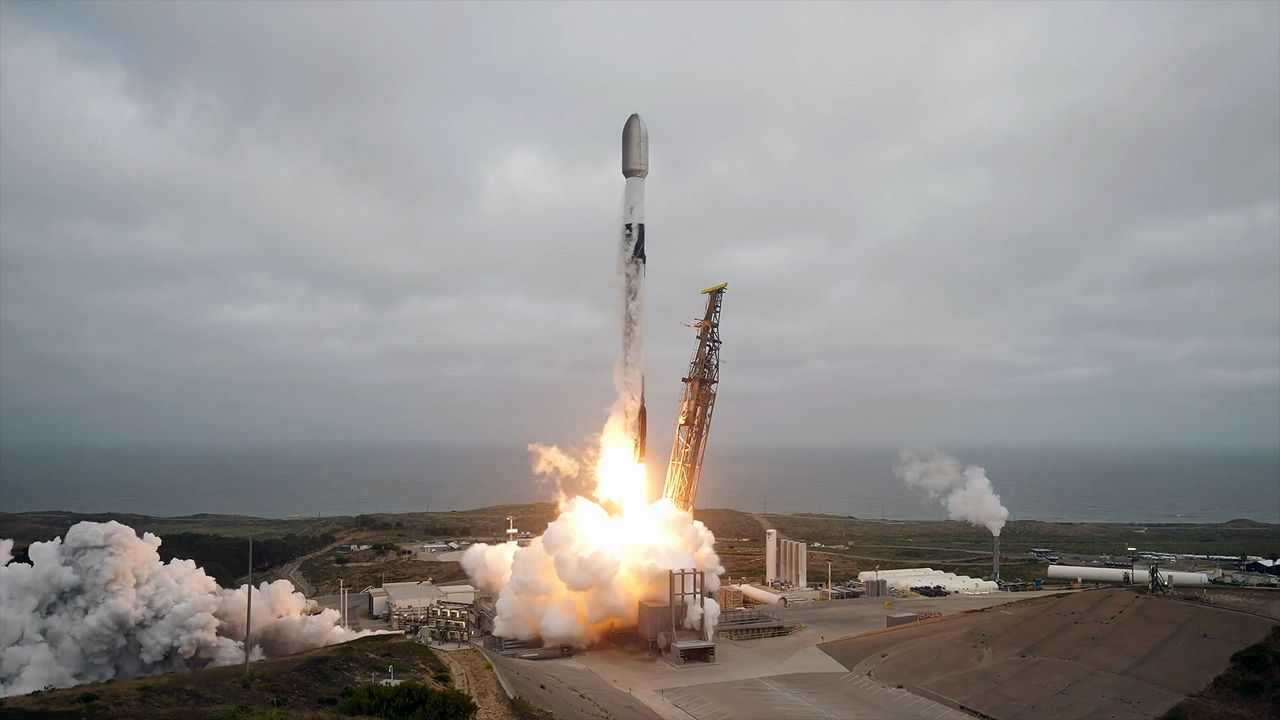
Morning: Starlink 17-40 from Vandenberg
The day began at Vandenberg Space Force Base in California, where a Falcon 9 lifted off from pad 4E at 9:09 a.m. PDT (12:09 p.m. EDT). The Starlink 17-40 mission delivered 24 broadband internet satellites to low Earth orbit, adding another increment to SpaceX's already expansive global network.
Evening: SXM-11 from Cape Canaveral
Hours later, attention shifted to Florida. A Falcon 9 carrying the SXM-11 satellite had its launch window open at pad 40 at Cape Canaveral Space Force Station at 10:25 p.m. EDT, kicking off a mission with a notably different profile than a routine Starlink batch. SXM-11 is a heavyweight spacecraft—approximately 7.5 tons—and stands more than 230 feet tall, built by Intuitive Machines for SiriusXM as part of a refresh of the company's satellite radio constellation.
Taken together, the two launches illustrate how thoroughly SpaceX has embedded itself across the U.S. commercial satellite sector. Within a single day the company flew a mission for an established satellite radio operator and expanded its own broadband infrastructure, doing so from two distinct Space Force launch facilities on either end of the country. The operational tempo required to execute two clean Falcon 9 missions in one day, from two different pads, for two functionally unrelated customers, has become routine enough that neither launch drew particular attention beyond standard mission coverage★.
★ AI inference: One or more analytical conclusions in this article were drawn by the AI from cited facts and are not directly stated in the cited sources.