
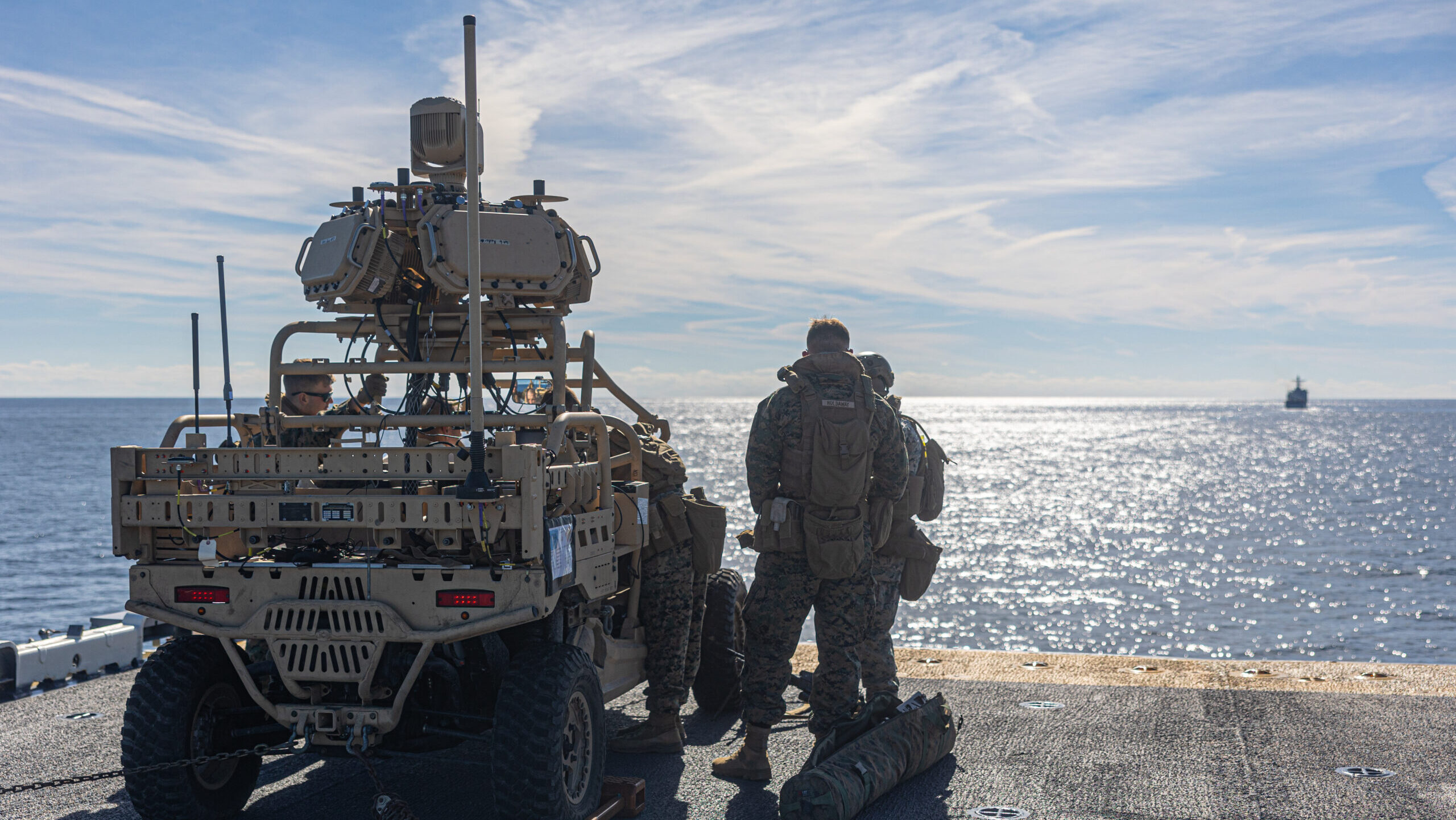
According to Defense One and Military Times, the deal calls for delivery of more than a dozen vehicles by early 2027.
The vehicles are designed to transport air defense systems deeper into contested terrain without placing Marines directly at risk. That mission profile — moving high-value equipment into areas where enemy fire or difficult terrain would make manned transport hazardous — reflects a broader shift in how the Marine Corps is thinking about tactical mobility. Rather than simply automating routine logistics, the service is looking to autonomous platforms to extend the reach of its air defense posture.
A Production Milestone, Not Just a Development Deal
What distinguishes this contract is its nature: it is a production award, not a research-and-development agreement. That distinction matters. Production contracts signal that a technology has cleared the threshold from promising concept to something the military is prepared to field. The award represents a meaningful validation of its platform's readiness for operational military use.
The roughly $20 million figure is modest by Pentagon standards, but the symbolic weight is considerable.
Breaking Defense reported the award on June 30, 2026, a day after Defense One and Military Times covered the initial announcement. No details about the specific autonomous driving stack or sensor suite were made public in available reporting★, and the Marine Corps has not disclosed whether additional production tranches are planned beyond the initial batch★. What is clear is that the service has now committed real production funding to the concept — a step that tends to pull future investment and follow-on contracts in its wake.
★ AI inference: One or more analytical conclusions in this article were drawn by the AI from cited facts and are not directly stated in the cited sources.