
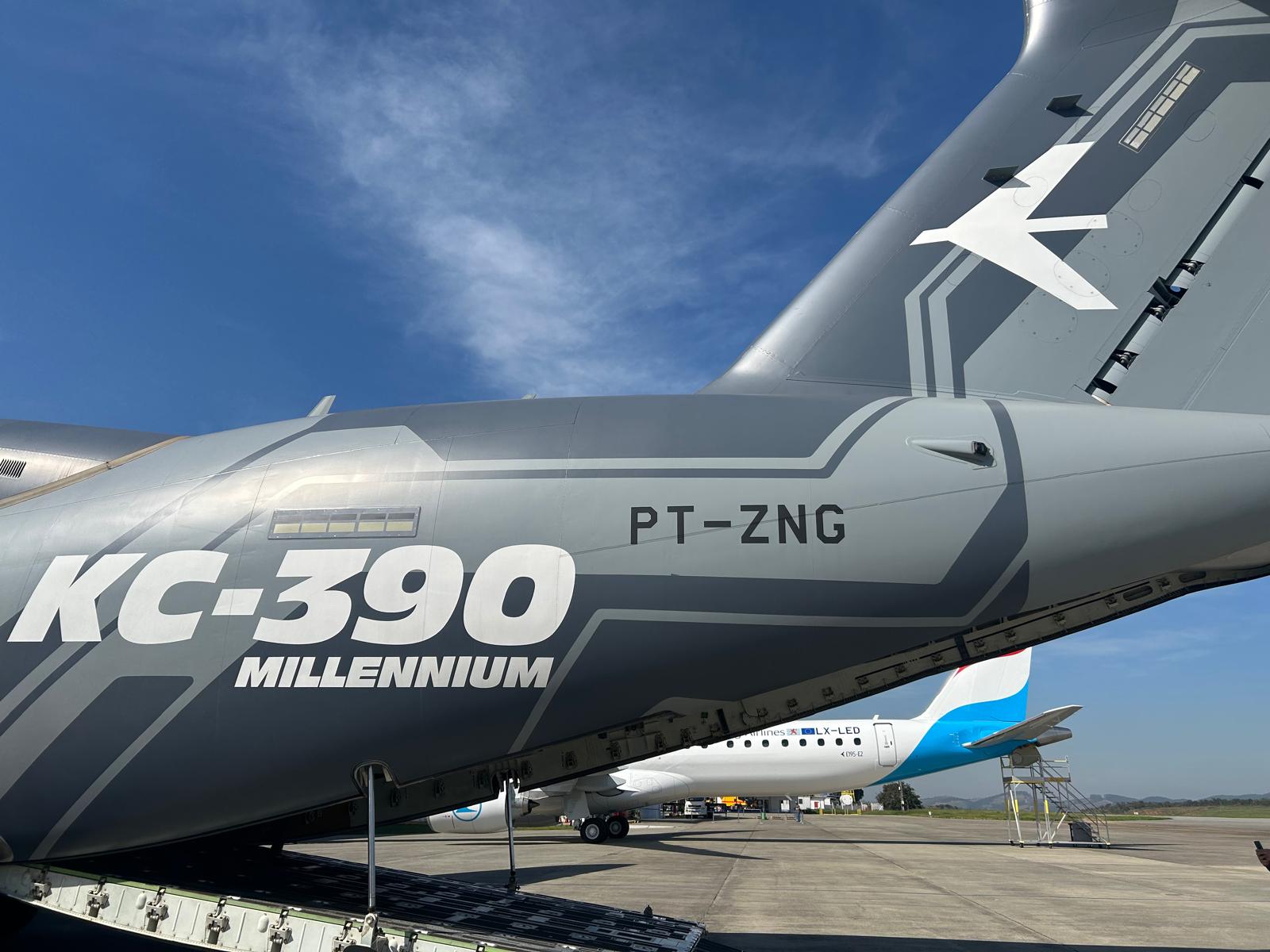
Embraer is on track to deliver its KC-390 tactical transport aircraft to three new customers in 2026: the Czech Republic, Uzbekistan, and South Korea. Its expanding customer roster reflects a willingness among allied and partner nations to diversify beyond traditional supply chains. The Czech Republic's acquisition extends the platform into NATO's eastern flank★; Uzbekistan's purchase marks a notable entry into Central Asia★; and South Korea's first delivery would place the KC-390 in the Indo-Pacific★, where it could support coalition logistics alongside U.S. and allied forces.
Those procurements should be understood in proportion, however. The KC-390's growing footprint represents a diversification of options rather than a wholesale departure from established air mobility arrangements.
The delivery push nonetheless arrives at a moment of documented strain in the U.S. defense industrial base. Solid rocket motor stockpiles — critical to missile interceptors and a wide range of precision munitions — have dwindled to levels that analysts say will require overcoming a complex set of industrial challenges to rebuild. Breaking Defense separately reported that supply shortages and damaged radar systems are raising concerns about air and missile defense readiness more broadly.
That attribute has taken on new relevance in an operational environment where U.S. stockpile limitations can affect partner readiness indirectly.
Europe's defense-industrial realignment is also advancing on a parallel track. Rheinmetall and Vantor have agreed to a joint ISR venture aimed at building combined military-space intelligence capabilities for the Bundeswehr.★
Taken together, accelerating KC-390 deliveries across three theaters, constrained U.S. solid rocket motor production, and European moves toward joint ISR capacity point in a consistent direction: allied and partner nations are building more distributed, interoperable defense postures — hedging, in varied ways, against the industrial bottlenecks that have come to define the current era of great-power competition.
★ AI inference: One or more analytical conclusions in this article were drawn by the AI from cited facts and are not directly stated in the cited sources.