
The last week of June and the opening days of July 2026 brought an unusually dense cluster of satellite launches and contract announcements, underscoring how quickly both commercial operators and government customers are racing to secure orbital capacity.
Commercial Launches: An Era Ends and a Pace Accelerates
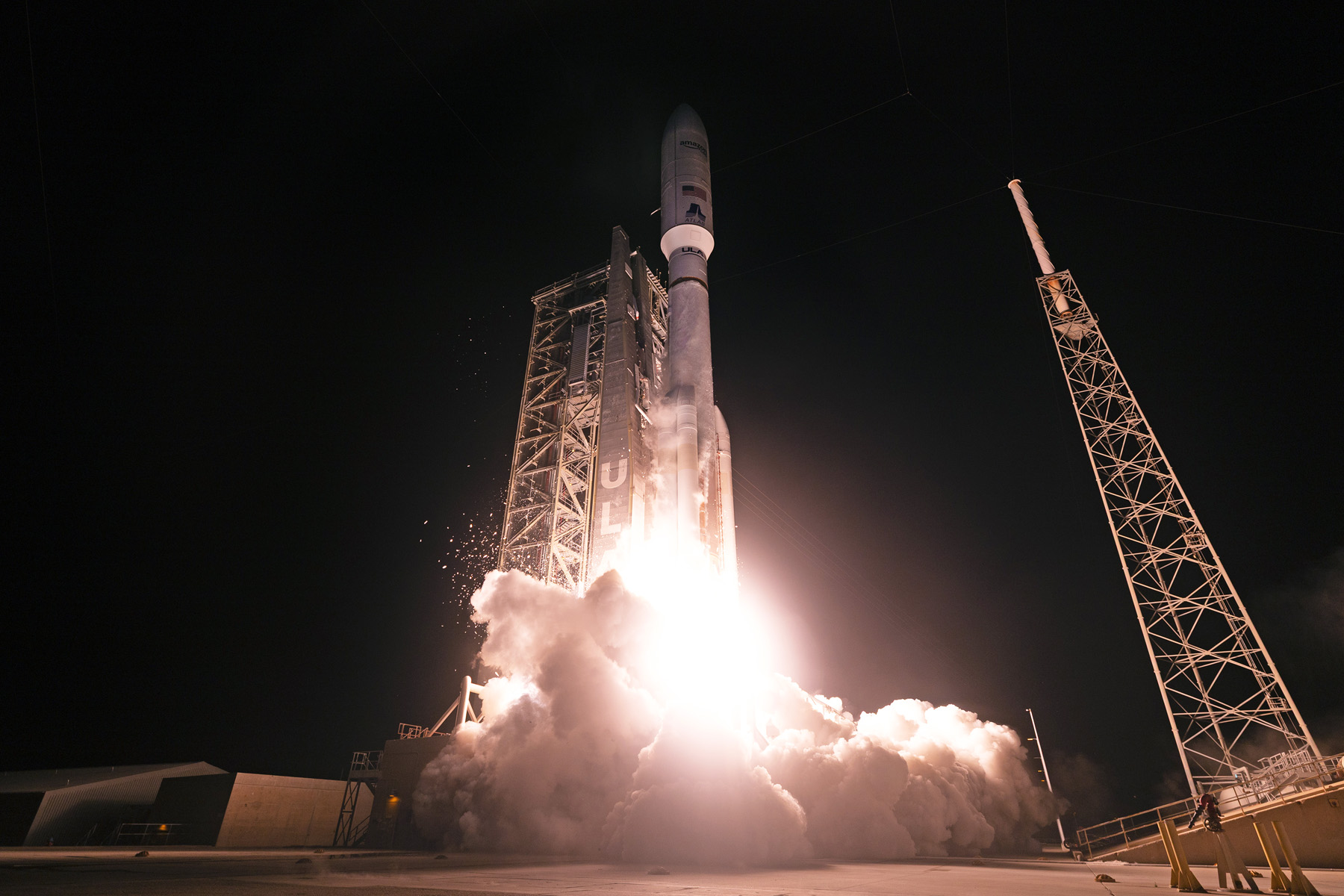
United Launch Alliance closed out the Atlas 5 551 configuration with the Leo Atlas 8 mission, which lifted off from pad 41 at Cape Canaveral Space Force Station in the early hours of July 2, 2026. The rocket carried a batch of Amazon Leo broadband satellites, and Spaceflight Now and SpaceNews both confirmed this was the last Atlas 5 mission to carry a satellite payload — ending a chapter for one of the United States' most reliable heavy-lift vehicles.
SpaceX showed no comparable nostalgia for slowing down. On June 28, a Falcon 9 lifted off from Cape Canaveral carrying SXM-11, the newest addition to SiriusXM's broadcast satellite constellation★. Built by Intuitive Machines and weighing 7.5 tons, the spacecraft is part of an ongoing constellation refresh. Three days later, SpaceX flew the Starlink 17-46 mission from Vandenberg Space Force Base, deploying 24 additional Starlink broadband satellites and marking the 77th Falcon 9 launch of 2026. The sheer frequency of these flights — two commercial Falcon 9 missions within days of each other, alongside ULA's historic final Atlas 5 — reflects how mature commercial launch infrastructure has become as a backbone for civilian connectivity services.
Defense Satellites: Austria Moves to Expand Sovereign Orbital Capability
On the military side, Austria has contracted R-Space to build Aurora, its second military satellite, according to an exclusive report by Payload. Aurora is one of three planned government-backed demonstration missions designed to validate new technologies in orbit. The contract signals that smaller European nations with no tradition of large defense space programs are now actively developing sovereign orbital assets, rather than relying entirely on allied infrastructure or commercial services.
Taken together, this week's activity — a retiring workhorse rocket, a high-cadence commercial launch provider, and a European nation building its own military satellite — illustrates how thoroughly space has become a contested and crowded domain, where the boundary between civilian and defense infrastructure grows harder to draw with every passing launch window.
★ AI inference: One or more analytical conclusions in this article were drawn by the AI from cited facts and are not directly stated in the cited sources.