
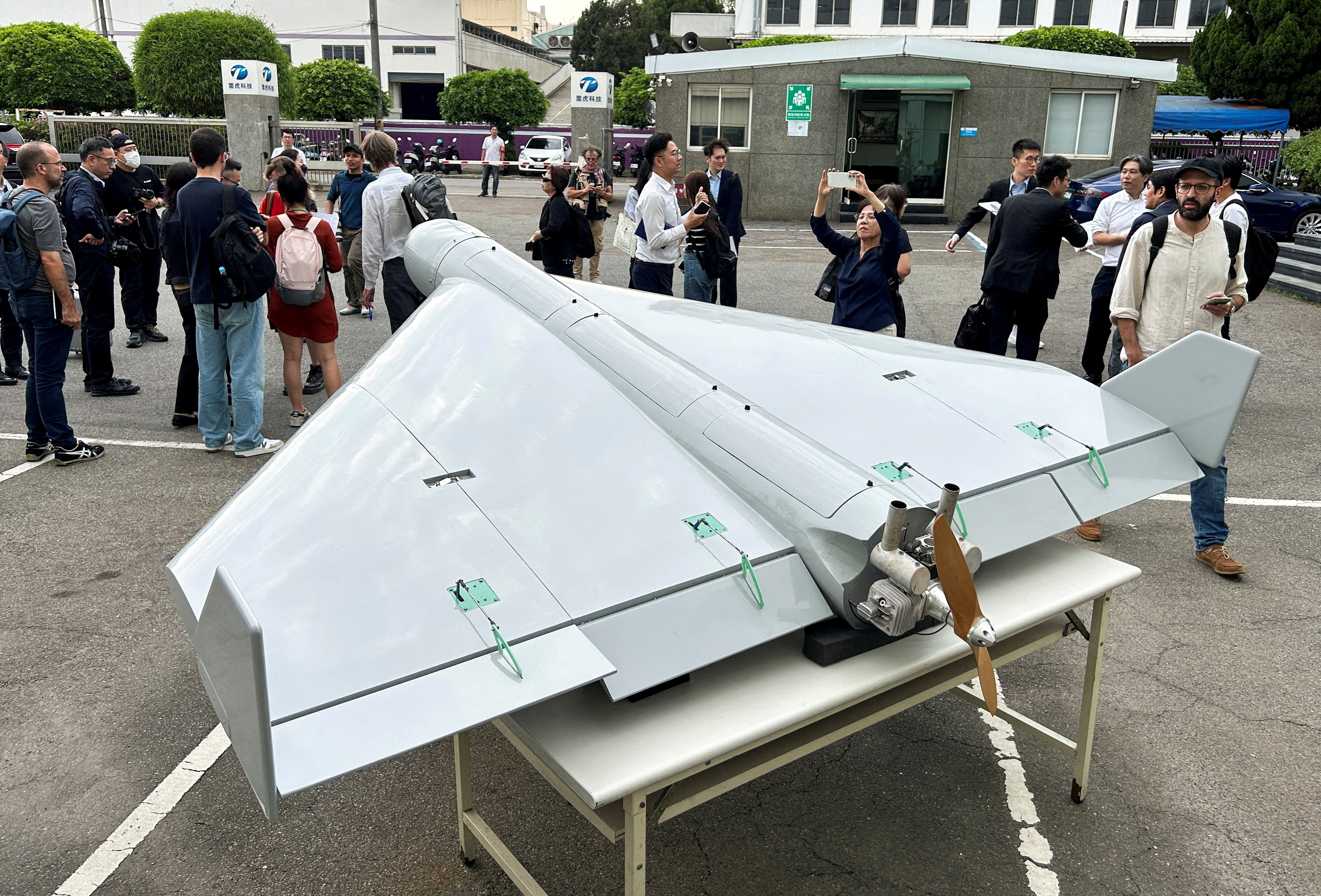
The top American diplomat in Taiwan has publicly urged the island to transform itself into a dense, distributed drone defense network as a means of deterring military conflict with China — framing the strategy in terms that signal a clear US preference for asymmetric deterrence over conventional military buildup.
American Institute in Taiwan (AIT) Director Raymond Greene, who functions as the de facto US ambassador, described the approach as building a "hornet's nest" of drones. Greene called the technology a "game-changing opportunity" to enhance Taiwan's security. The statement, delivered in early July 2026, represents an unusually direct American endorsement of a specific defense doctrine for the island★.
The Strategic Logic
The "hornet's nest" framing points to a doctrine built around distributed resilience: rather than relying on a smaller number of high-value, easily targeted conventional systems, Taiwan would field large numbers of autonomous or semi-autonomous drones dispersed across its terrain★. The idea is that an adversary cannot neutralize such a network with a handful of strikes — attacking it triggers a swarming response that raises the cost and complexity of any military operation★.
Taiwan has acknowledged the need to accelerate defense upgrades in the face of what officials describe as a stepped-up threat from Beijing. China continues to assert sovereignty over Taiwan and has intensified military pressure in and around the Taiwan Strait in recent years★.
Diplomatic Weight
Greene's comments carry institutional weight. A public statement of this specificity — advocating for a named defense concept — goes beyond the kind of general security assurances the US routinely offers★ and suggests active American interest in shaping how Taiwan structures its defenses.
Whether Taiwan moves to formally adopt a drone-centric doctrine, and at what scale or pace, was not specified in the available reporting. But Greene's remarks arrive as Taiwan continues to weigh how best to allocate defense spending and modernize its military in the face of ongoing pressure from the mainland.
★ AI inference: One or more analytical conclusions in this article were drawn by the AI from cited facts and are not directly stated in the cited sources.