
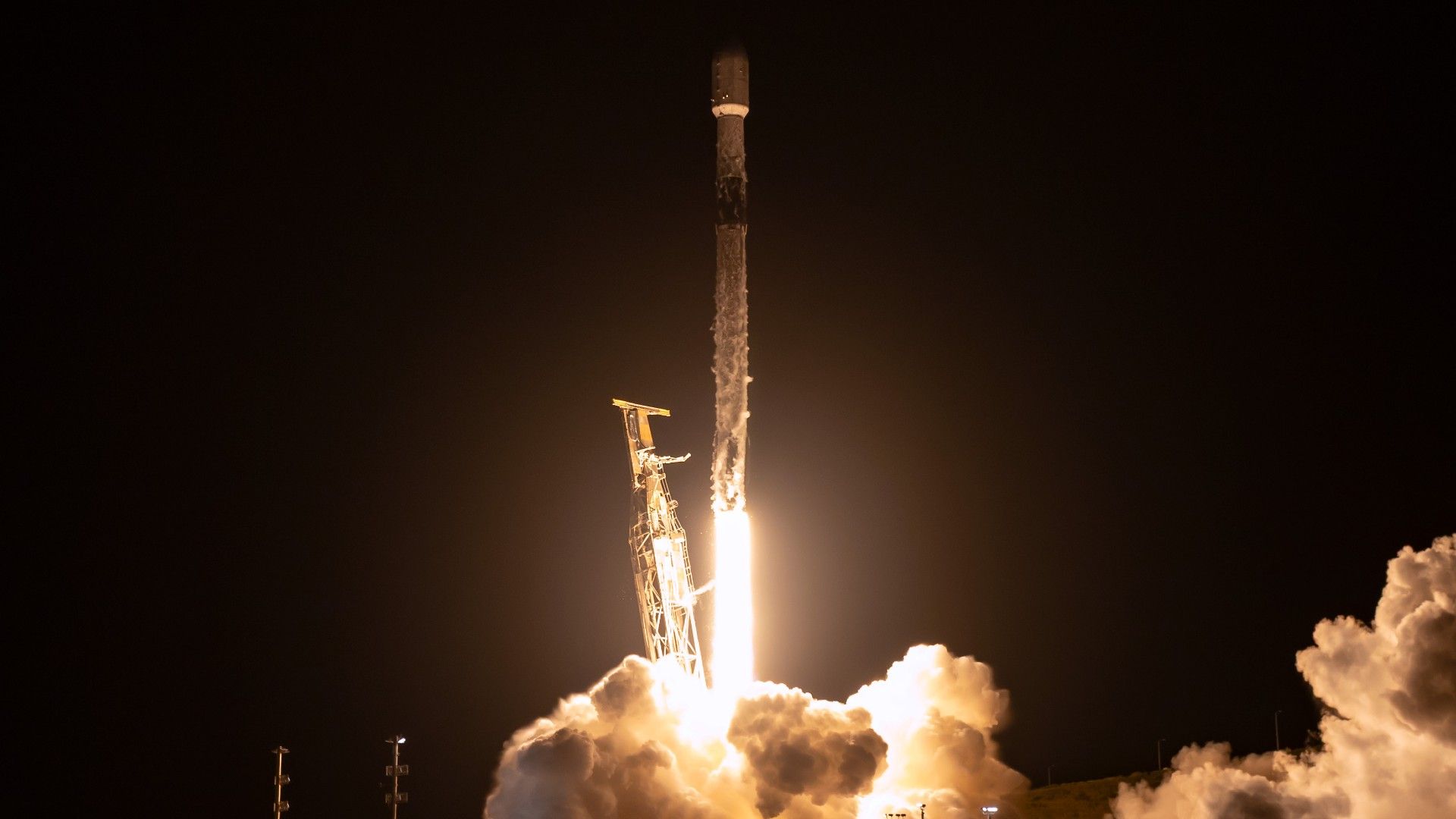
SpaceX is set to launch its Transporter-17 rideshare mission early Tuesday, July 7, carrying 81 payloads to Sun-synchronous Earth orbit in a flight that blends civilian scientific instruments with U.S. government defense technology demonstrations. Liftoff from pad 4E at Vandenberg Space Force Base is scheduled within a 95-minute window opening at 12:10 a.m. PDT (3:10 a.m. EDT / 07:10 UTC). Once the rocket reaches orbit, SpaceX will conduct a deployment sequence lasting roughly 2.5 hours.
The manifest reflects the increasingly diverse roster of customers that SpaceX aggregates on its dedicated rideshare flights. Alongside commercial satellites, the mission carries fire-detection instruments and 3D printing hardware destined for orbit—as well as military technology demonstration payloads for government customers.
Military and Commercial Payloads on the Same Stack
The presence of military tech demos on a routine rideshare manifest is no longer an anomaly—it is a pattern. The AOL and Space.com coverage of this mission treats the government-commercial mix as unremarkable scheduling★, a telling indicator of how normalized the arrangement has become.
That opacity sits alongside openly commercial payloads like fire detectors and in-space manufacturing hardware, a juxtaposition that captures the current state of the small-satellite launch market: a single Falcon 9 flight serving national security priorities and civilian innovation simultaneously, on the same rocket, departing the same pad, within the same two-and-a-half-hour deployment window★.
★ AI inference: One or more analytical conclusions in this article were drawn by the AI from cited facts and are not directly stated in the cited sources.