
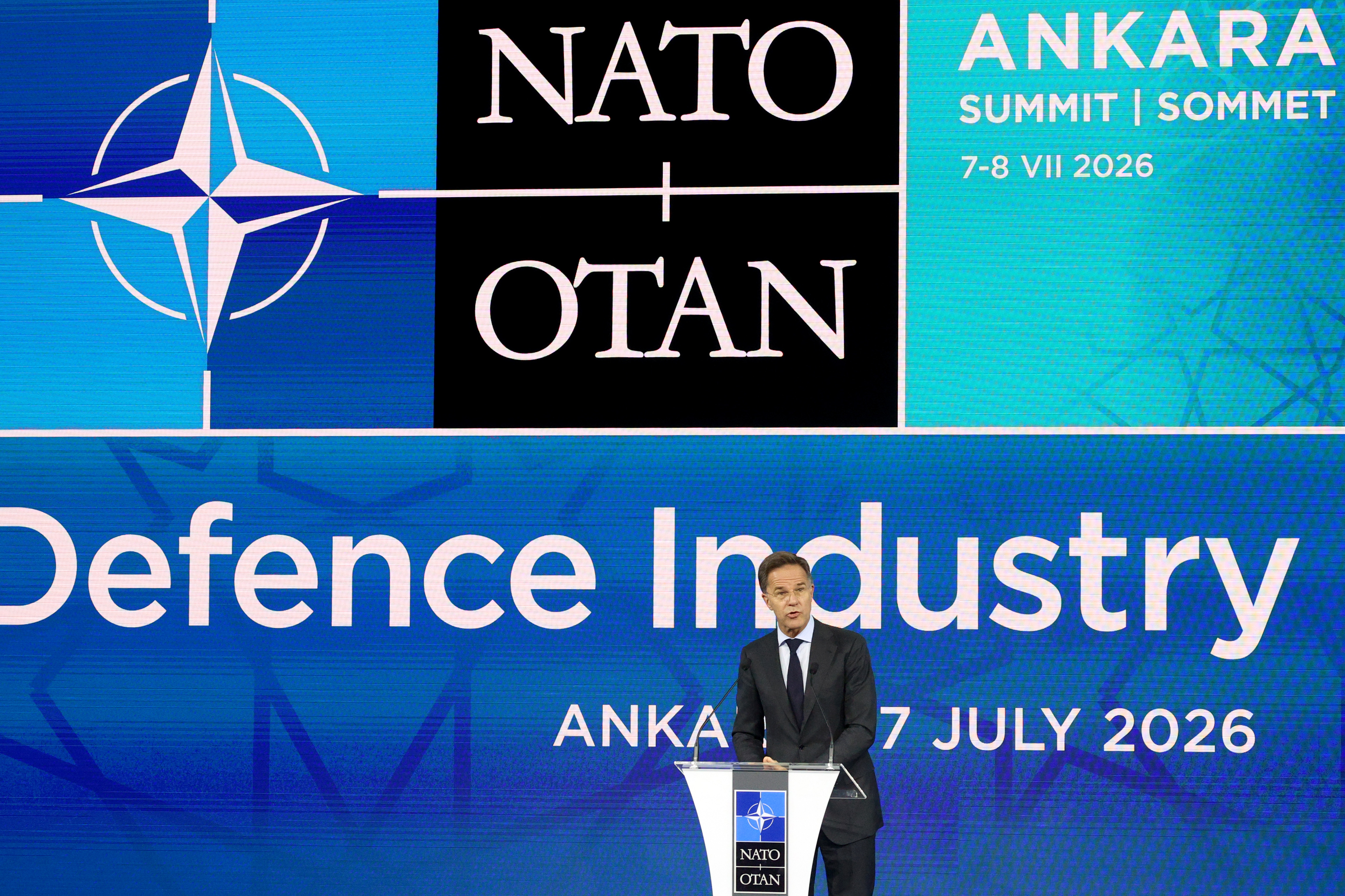
Eight NATO member nations on July 7, 2026, formally announced the HALO satellite constellation initiative, a program structured to federate spacecraft operated by individual alliance members into a single coordinated mega-constellation. The announcement, reported by Defense News and C4ISRNet based on statements from alliance officials, represents a concrete step toward addressing one of NATO's persistent space challenges: enabling coordinated use of satellite assets that member nations have built, own, and operate independently under national programs with different technical specifications, procurement histories, and operational authorities. The federated model HALO is adopting places it in distinct territory relative to previous joint alliance programs and carries direct implications for how the initiative will be built and what it can realistically deliver.
HALO: Architecture and Program Structure
Alliance officials described the program's central objective as stitching together spacecraft managed individually by member countries into a unified operational constellation. The federated design — keeping national ownership and operation in place while building a shared coordination layer on top — reflects the practical constraints of multilateral satellite programs. A jointly owned and operated alliance constellation would require harmonized procurement rules, shared command authority, and cost-sharing arrangements that are consistently difficult to negotiate across sovereign members with different national budget cycles, procurement laws, and existing contract obligations. The federated approach sidesteps those barriers, which is why it is an attractive design choice — though it introduces a different set of integration challenges in their place.
The program's eventual operational scope will depend substantially on member contributions. HALO's constellation size, orbit coverage, and mission capabilities are not fixed in advance but will be shaped by what assets each of the eight participating nations elects to bring into the framework. That makes national contribution decisions — influenced by domestic budget pressures, existing satellite program schedules, and strategic priorities — the variable most likely to determine whether HALO becomes a substantive joint capability or a coordination framework with limited operational throughput.
The eight participating nations have not been publicly identified in reporting available at publication time★. NATO members operate satellite portfolios that span geostationary, medium Earth orbit, and low Earth orbit assets, using different frequency bands and ground-interface architectures built to national rather than alliance-wide specifications. Accommodating that heterogeneity is the foundational technical challenge HALO's designers face, and how they approach it will define whether federation delivers genuine interoperability or simply adds a coordination layer on top of already siloed national systems.
Programmatic and Commercial Implications
For space-industry professionals, the federated design concentrates the near-term commercial opportunity in integration infrastructure rather than satellite manufacturing. If the program proceeds as described — coordinating existing national assets rather than replacing them — initial procurement will focus on ground-system software, cross-domain data management solutions, secure inter-domain communication links, and network management tools capable of handling satellites operating under multiple separate national authorities simultaneously.
Spacecraft manufacturers are less immediately in scope, though the program will generate upgrade and interface-compatibility contracts for national satellites being brought into the HALO framework, and those will represent real near-term work. The more strategically significant early market is in systems integration and the data layer. Companies holding existing NATO certification and demonstrated capability in secure cross-domain solutions and military-grade communication standards are positioned ahead of general commercial satellite operators for early program phases. Vendors working in software-defined ground systems, link-layer encryption, and inter-domain data relay should track technical working-group announcements for engagement opportunities.
Governance architecture will be at least as consequential as the technical design for the program's long-term success. Operating a federated constellation across eight national programs requires clear and enforceable mechanisms for tasking authority, data ownership and access, bandwidth allocation under congested or contested conditions, and liability assignment when operations fail. None of those structures have been publicly specified at this stage, and their design will define the legal and contractual environment for industry partners. Unresolved governance questions are also what most frequently stall multilateral programs that are technically sound: whether HALO can build workable decision frameworks at the political and operational levels is as important as whether the integration technology can be made to work.
The broader LEO deployment environment provides useful market and operational context. Amazon Leo — formerly known as Project Kuiper, managed by Kuiper Systems LLC, an Amazon subsidiary — completed its eighth production batch launch on July 2, 2026★, using a United Launch Alliance Atlas V 551 from Space Launch Complex 41 at Cape Canaveral Space Force Station, continuing the buildout of a commercial LEO broadband constellation★. The National Reconnaissance Office completed the fourteenth launch batch for an imaging and reconnaissance constellation developed jointly by SpaceX and Northrop Grumman on June 19, 2026, flying on a SpaceX Falcon 9 from Space Launch Complex 4E at Vandenberg Space Force Base. These parallel deployments reflect the density of current LEO constellation activity — a competitive and increasingly congested orbital environment that HALO's contributing national assets will need to operate within and, from a spectrum-coordination standpoint, navigate around.
Technical Challenges and Near-Term Milestones
Executing a federated constellation across heterogeneous national systems is technically more demanding than a homogeneous new-build program. Satellites built to national specifications typically carry proprietary ground interfaces and may not natively support the data formats, command protocols, or latency tolerances that joint operations require. Bridging that variation requires hardware or firmware modifications to existing assets, development of software abstraction layers capable of handling interface diversity, or both — each path carrying cost implications that participating governments will need to evaluate on a system-by-system basis before committing assets to the framework.
Spectrum coordination is a parallel and long-lead-time constraint. A constellation drawing assets from eight national programs will encompass multiple frequency allocations across different regulatory jurisdictions. Coordinating shared operational use of those allocations requires engagement with national spectrum regulatory bodies and may involve ITU coordination for internationally registered filings. Delays in regulatory engagement compound directly into operational deployment timeline delays, making early visible action on spectrum licensing a meaningful indicator of program momentum that industry should watch for.
The specific interoperability standards HALO will adopt, the orbit regimes it will prioritize in initial phases, and its program schedule have not been publicly disclosed. The near-term milestones to monitor include the formal public identification of the eight participating nations, release of any framework agreements or memoranda of understanding, establishment of technical working groups and standards-body engagement, and first industry engagement — requests for information, calls for white papers, or early integration contract awards. Those signals will indicate whether HALO is transitioning from political commitment to defined program on an executable timeline or is still working through the foundational governance and technical agreements that must precede any serious contracting activity.
★ AI inference: One or more analytical conclusions in this article were drawn by the AI from cited facts and are not directly stated in the cited sources.