
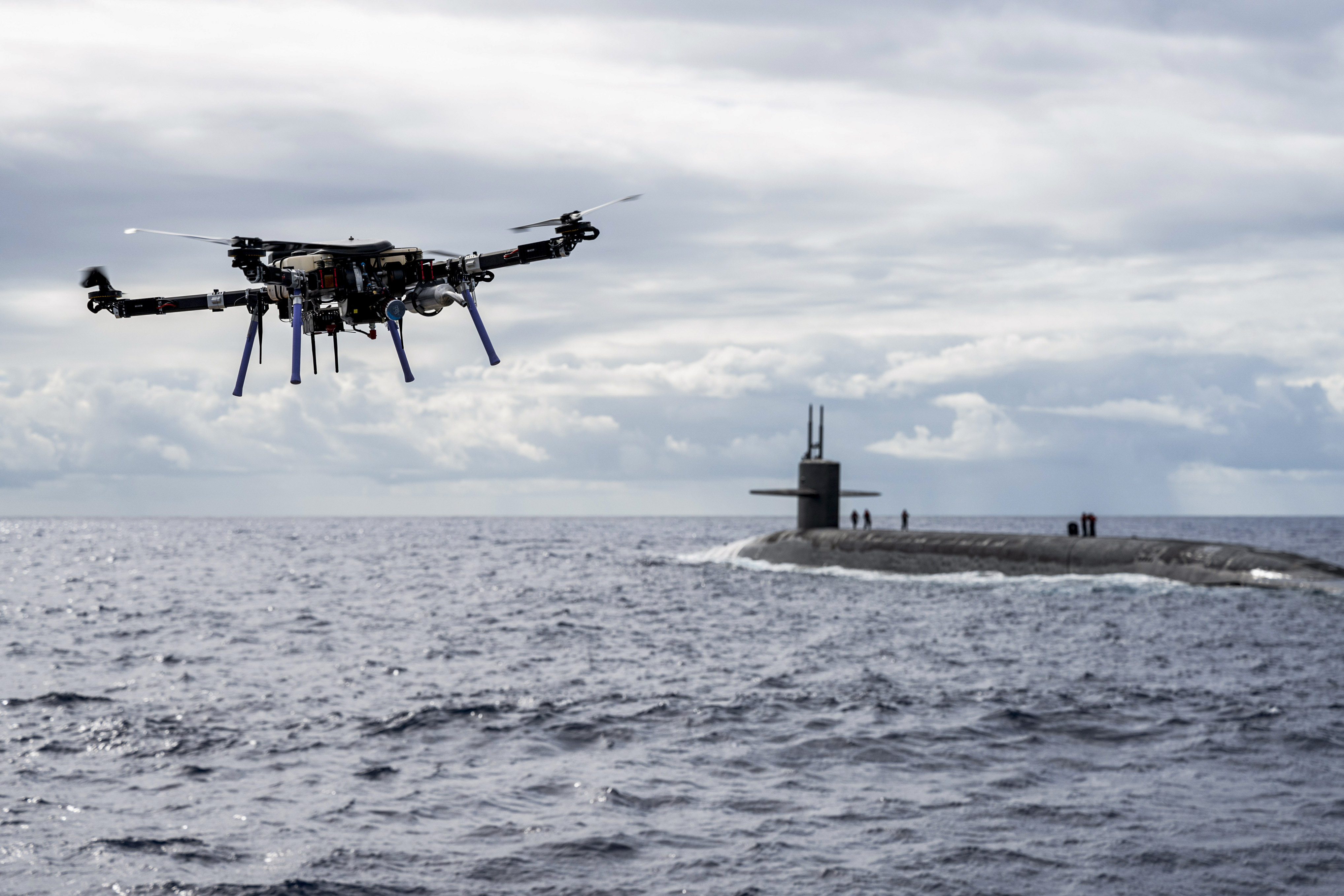
The service is now actively searching for improved methods to protect both the submarines themselves and the shore installations that support them, according to reporting published July 7 by Defense News, Military Times, and Navy Times.
The acknowledgment is notable because SSBNs derive their deterrent value largely from their perceived invulnerability★. A submarine at sea is extraordinarily difficult to locate and destroy, but the same vessel tied to a pier, moving through a port, or supported by land-based logistics infrastructure presents a different profile entirely. The Navy's reassessment signals that officials now view that shore-side exposure as a gap that adversaries — or proxies — could plausibly exploit with relatively low-cost munitions.
What Protection the Navy Is Seeking
One specific capability the service is pursuing is active protection systems for ground transport and convoy operations involving strategic weapons and equipment. These systems, as described by Navy Times, pair sensors with shotgun-style launchers mounted on armored vehicles to detect and intercept incoming anti-tank rockets before they strike their targets. The approach borrows from technologies developed to protect armored ground forces, now being adapted to shield assets of far greater strategic significance★.
The focus on convoy protection points to a vulnerability that extends beyond fixed installations. Moving nuclear-related equipment overland — whether between facilities, during maintenance cycles, or in response to a developing crisis — creates windows of exposure that fixed defenses cannot cover★. Closing that gap appears to be a priority.
Implications for Deterrent Credibility
The broader significance lies in what this reassessment represents for force posture thinking. Strategic deterrence has long been premised on the assumption that SSBNs are essentially untouchable★; adversaries who might contemplate a disarming first strike have faced the problem of finding and killing submarines spread across ocean depths★.
Addressing that vulnerability without undermining the operational security that makes SSBNs effective will require the Navy to balance transparency about gaps against the need to avoid advertising the specifics of what it is hardening and where. The search for new protection methods is itself an admission that the threat landscape around the nation's most consequential naval assets has shifted in ways that existing force protection was not fully designed to meet★.
★ AI inference: One or more analytical conclusions in this article were drawn by the AI from cited facts and are not directly stated in the cited sources.