
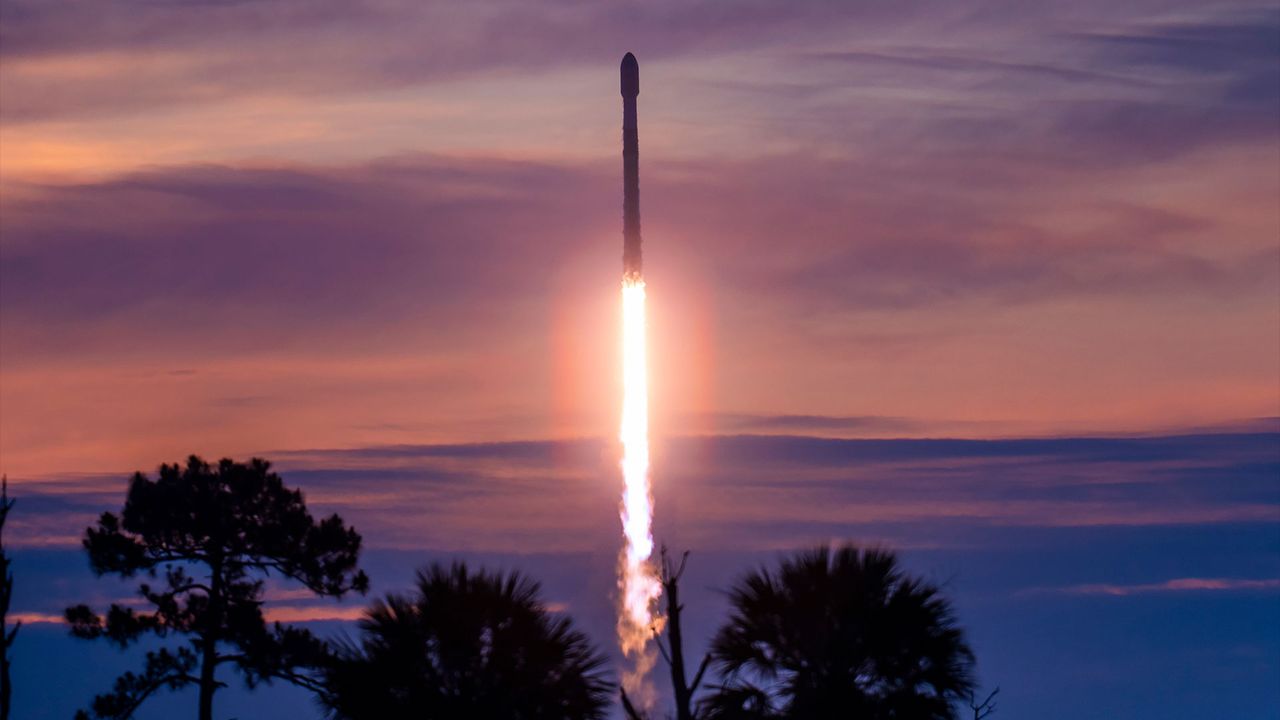
SpaceX's Falcon 9 booster B1067 launched Thursday, July 9, 2026, at 5:25 a.m. EDT★ from Pad 40 at Cape Canaveral Space Force Station, carrying the Starlink 10-42 payload on what both Spaceflight Now and Space.com confirm is the most times a single orbital-class rocket booster has ever flown★. The mission marks a concrete milestone in the commercial spaceflight industry's push to treat rocket hardware more like airline assets than single-use hardware★.
A Record That Reflects an Industrial Shift
Reaching 36 flights on a single booster is not merely a headline number — it reflects a fundamental change in how launch providers approach vehicle economics. Each additional flight on the same booster reduces the per-launch amortized hardware cost, and a 36-flight cadence on a single core demonstrates that SpaceX's refurbishment and inspection pipeline has matured to a point where boosters can cycle through missions with consistent reliability.
Satcom Scaling and Military Relevance
Whether B1067 pushes toward 40 flights or beyond will depend on that ongoing assessment — but Thursday's launch demonstrates that the upper bound, whatever it proves to be, remains well above what the industry once thought achievable for reusable rocket hardware.
★ AI inference: One or more analytical conclusions in this article were drawn by the AI from cited facts and are not directly stated in the cited sources.