
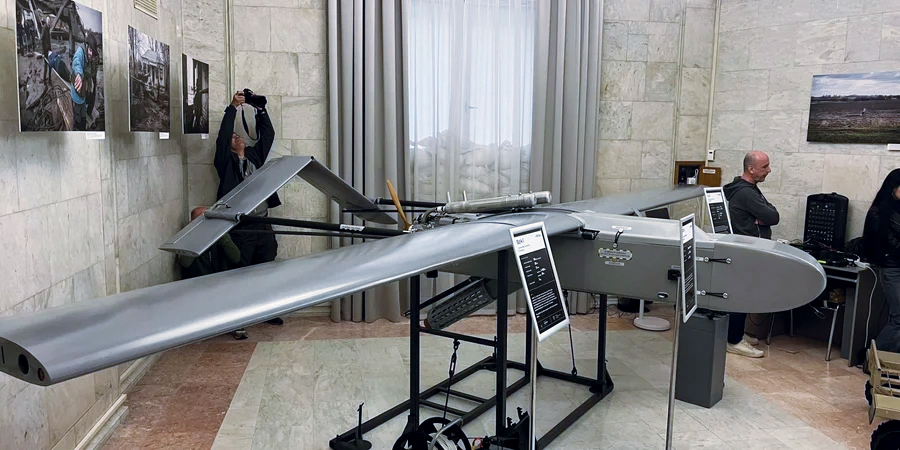
Analysts are now examining what that accomplishment means for the future of airpower, both in this war and in any future peer conflict NATO might face.
Turning Disadvantage Into Strategy
In just seven months, Ukraine executed nearly 60 strikes that penetrated more than 500 kilometers beyond the front line, with more than 20 of those reaching even deeper into Russian territory, according to analysis from the Atlas Institute for International Affairs.
The Atlantic Council has argued that this approach is doing something strategically counterintuitive: it is converting Russia's sheer geographic scale from an advantage into a liability. Ukraine has exploited those coverage gaps relentlessly, forcing Russia to allocate defensive resources across a front that stretches far behind its own lines★.
Airpower Theory Meets Twenty-First Century Constraints
Air & Space Forces Magazine frames Ukraine's campaign as a genuine reimagining of classic strategic attack doctrine rather than a crude improvisation. Ukraine cannot replicate the delivery systems those theorists envisioned, but it is pursuing the same underlying logic through asymmetric means★.
That adaptation carries direct lessons for NATO. Ukraine's experience complicates that assumption in two directions. First, it demonstrates that a technologically inferior actor can still conduct meaningful strategic attack if it innovates around its limitations★.
The broader implication is that strategic airpower is no longer the exclusive province of states that can field expensive manned aircraft★.
★ AI inference: One or more analytical conclusions in this article were drawn by the AI from cited facts and are not directly stated in the cited sources.