
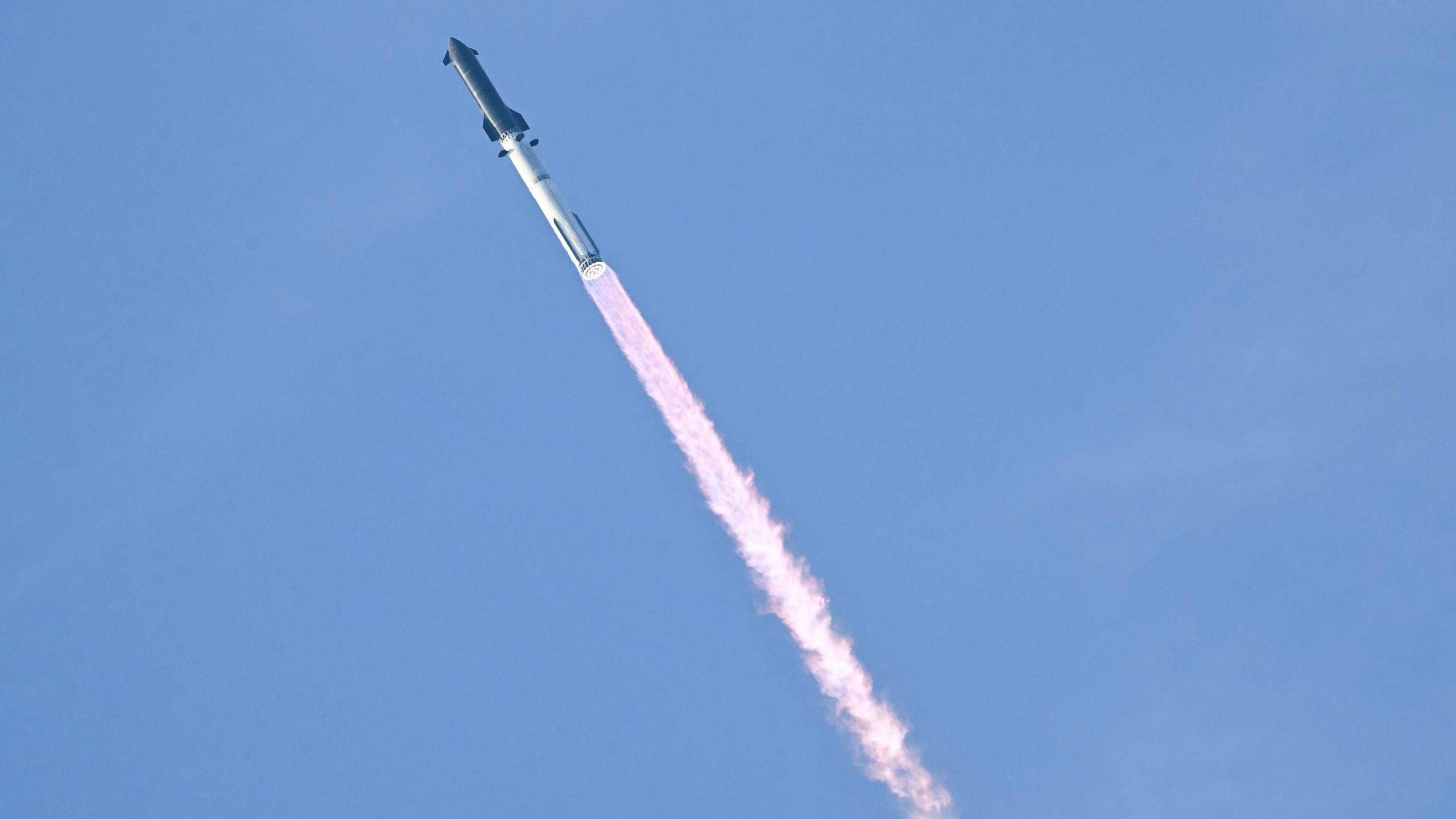
SpaceX achieved two long-sought milestones on September 28, 2026, when Starship reached orbit for the first time and successfully deployed 26 Starlink V3 satellites into low Earth orbit, completing the mission designated Starlink Group 31-1. Flight 14 lifted off from Orbital Launch Pad 2 at SpaceX Starbase in Texas at 12:48 UTC and was confirmed successful across its primary objectives. With orbital insertion and in-orbit payload delivery identified as the defining objectives. Both were met.
SpaceWatch.GLOBAL had framed the mission in pre-flight coverage around precisely those twin objectives, headlining its preparation article as SpaceX's first orbital flight and in-orbit Starlink deployment and identifying both as the program's central tests for Flight 14★. Space.com, reporting on the outcome, described Starship as "the largest rocket ever built" and characterized the flight as "dramatic," writing that the vehicle had completed the mission by "checking a very important box on the road to operational flight." Both capabilities — orbital insertion and functional satellite deployment — were confirmed on the same mission.
The outcome marks a qualitative shift in the program's status. Reaching orbit is the threshold that separates a vehicle in developmental qualification from one that can deliver payloads to operational destinations — and demonstrating functional satellite deployment on the same flight as first orbit confirms that the end-to-end mission chain works under actual spaceflight conditions.
Mission Profile and Vehicle Configuration
Flight 14 was the third flight of the Starship V3 vehicle configuration and the first time any Starship variant, across fourteen test flights, carried and deployed an operational payload. With three flights of data accumulated on the V3 configuration, Flight 14 extended the test record into the one category of performance no previous Starship flight had demonstrated: end-to-end payload delivery under orbital conditions. Flight 14 therefore represents a different class of result: the first Starship mission to produce direct commercial output alongside developmental data.
The Starlink Group 31-1 mission targeted low Earth orbit, the operational regime where SpaceX maintains the Starlink broadband constellation★. The Space Devs launch catalog classifies the mission under the Communications category, consistent with the operational function of the Starlink network and underscoring that while Flight 14 carried the formal designation of a test flight, its payload served the same functional purpose as any standard Starlink delivery mission. The flight profile reflects the same orbital destination used by the Falcon 9 Starlink missions that currently sustain the production manifest★.
The satellites deployed were SpaceX's current-generation V3 Starlink platform. Their successful deployment aboard Starship confirms that the satellite-to-vehicle interface — including mounting structures, the release mechanism, and the sequencing logic governing each satellite's separation — has been validated in the actual flight environment★. That step is meaningful for any downstream planning that treats Starship as a recurring Starlink delivery vehicle: the integration process is now flight-proven rather than validated solely through ground testing and simulation.
The Pez Dispenser: Sequential In-Orbit Deployment
Following orbital insertion, the 26 satellites were deployed using the mechanism SpaceX calls the "Pez dispenser" system. As Payload reported, all 26 V3 satellites were released sequentially over a period of approximately 30 minutes★, completing the deployment phase of the mission.
The satellites are released through the internal mechanism sequentially, reflecting a deployment form factor suited to Starship's enclosed cargo architecture.
Qualifying the Pez dispenser through an actual orbital mission is a materially different achievement from ground testing. Thermal conditions, vacuum, structural loads from prior flight events, and the dynamics of satellite separation at orbital velocity all introduce variables that ground-based qualification cannot fully replicate. A complete 26-satellite sequence over 30 minutes★ represents a meaningful initial validation of the mechanism's behavior under flight conditions rather than laboratory analogs.
For comparison, the Falcon 9 Starlink Group 15-27 mission — which launched from Space Launch Complex 4E at Vandenberg Space Force Base at 01:47 UTC on September 20, 2026, eight days before Flight 14★ — carried 27 satellites for the Starlink mega-constellation, a batch count nearly identical to Starship's first deployment★. The relevance of Starship to constellation operators is not the number delivered on this demonstration, but the scale the vehicle is designed to eventually accommodate.
Operational and Strategic Significance
For satcom operators and the government agencies that depend on LEO communication infrastructure, Flight 14's results shift Starship from theoretical future capability to demonstrated delivery mechanism. Space.com's characterization of orbital insertion as "checking a very important box on the road to operational flight" frames the milestone as validated capability in a defined sequence rather than a declaration of operational readiness — and Flight 14 confirmed two items in that sequence simultaneously★.
That said, Starship has not yet demonstrated the reusability, launch cadence, or reliability profile that operational replenishment missions demand★. Flight 14's success is an important step toward those requirements, not their fulfillment. The Falcon 9 Block 5's continued role in the regular Starlink manifest — illustrated by the September 20 Group 15-27 mission — reflects the current operational division: Falcon 9 maintains the production schedule while Starship works through its developmental program on a separate track★.
The vehicle remains formally in test flight status.
Path Forward
With orbital insertion and functional satellite deployment now proven capabilities, the Starship program's principal remaining developmental objectives center on vehicle reusability and operational cadence★. The Space Devs launch catalog records Flight 14 as "Launch Successful," formally confirming that the mission's primary objectives were met. Repeatable upper stage reentry and recovery, high-tempo booster turnaround, and scaling launch frequency to commercially meaningful rates are the milestones that stand between the current test program and an operational vehicle. The sources for this briefing do not specify which additional objectives beyond orbit and satellite deployment were evaluated during Flight 14, beyond the confirmed success of the primary mission goals.
Each mission that meets its primary objectives reduces schedule uncertainty and moves the vehicle's eventual operational service date closer to the present.
The next milestones to watch are upper stage recovery demonstrations under orbital reentry conditions, larger satellite batch counts on future Starship Starlink flights as the Pez dispenser system matures, and the eventual demonstration of a complete reusable flight cycle from launch through landing and turnaround★. The pace at which SpaceX reaches those waypoints will determine how quickly Starship's large-payload delivery capability becomes available to the constellation operators for whom rapid, scalable satellite deployment has moved from aspirational requirement to active planning factor.
★ AI inference: One or more analytical conclusions in this article were drawn by the AI from cited facts and are not directly stated in the cited sources.